Asanaverse

MS Fatigue and Movement

Yoga for Fatigue and Movement With MS

The fatigue is not tiredness, and everyone who has tried to explain it knows how badly that word does. It arrives without being earned, it does not answer to sleep, and heat makes it worse. So does the exercise that is meant to help.

This guide leads with fatigue rather than balance, because that is the order the evidence runs in. What the research supports and what it plainly does not, why a cool room is part of the practice, and a twelve week program built around the days that go badly.

Who this guide is for

Signs this guide was written for you

This is for adults with MS who walk independently or with one stick, with fatigue as the main symptom, alongside neurological care.

  • ·You have a confirmed MS diagnosis and walk independently or with one stick.
  • ·Fatigue is your main symptom, or close to it.
  • ·You have not had a relapse in the past month.
  • ·You can practise in a cool room and stop when you get warm.
  • ·You want something that works on a bad day as well as a good one.

What causes MS Fatigue and Movement

The strongest evidence here is for fatigue, and the weakest is for balance. The original title had that the other way round.

Across the meta-analyses, fatigue is where yoga in MS holds up. Seven trials with 670 people found it better than usual care for fatigue and for mood. Then the cleanest single trial randomised 56 people to twelve weeks of Iyengar yoga, physiotherapy or nothing, measured the Berg balance scale and a six minute walk, and found no difference between the three groups on either. Balance and walking are the things this kind of program is usually sold on, and they are the things it has least support for.

What that same trial did find is worth having. Physical functioning, vitality, mental wellbeing and social functioning all improved significantly in the yoga group. People felt more able and more alive without walking further on a test. That is a real result, it just is not the one the title promised, so the title changed.

  • ·A meta-analysis of 7 trials with 670 people found yoga better than usual care for fatigue and mood.
  • ·Against other exercise, there was no difference, and a Cochrane review of exercise for MS fatigue found almost the same effect size across 26 trials.
  • ·In the cleanest controlled trial, twelve weeks produced no significant difference on the Berg balance scale or the six minute walk.
  • ·The same trial found significant gains in physical functioning, vitality, mental wellbeing and social functioning.
  • ·Around three quarters of people with MS get a temporary worsening of symptoms as body temperature rises, which usually settles within a day.

Safety

When to practise and when to get it looked at

Three things that shape every session in this program, and two lines where neurology comes before a practice.

How to practise so it works

  • ·Cool room, moderate pace, breaks before you need them. Around three quarters of people with MS get a temporary worsening of symptoms as body temperature rises, and it usually settles within a day.
  • ·A wall or a chair for every standing position, as the standard version rather than the modification.
  • ·Judge the dose by the day after. Fatigue that is worse for more than a day means it was too much, and the answer is a smaller session rather than more determination.
  • ·Not during a relapse, and not if you need a wheelchair or cannot walk independently. There is essentially no research covering either situation.
  • ·New or worsening neurological symptoms that have not been assessed belong with your neurologist before they belong in a practice.

For yoga teachers

Teaching a class for MS Fatigue and Movement

Treat room temperature as part of the plan. Around three quarters of people with MS get a temporary worsening of symptoms as body temperature rises, from the environment or from the effort. Blurred vision or new weakness partway through a class is usually that, it usually settles within a day, and it is not a relapse. A cool room, a moderate pace and breaks before they are asked for are the intervention, not the courtesy.

Make the chair the standard version of every standing pose, and say so out loud. Balance deficits are a core symptom in this group, and the trials that measured balance directly found no yoga specific advantage. Supported leg work is worth doing anyway, and it is worth doing with a hand on something.

Teach pacing explicitly. Fatigue is both the target and the risk here: a session that leaves someone worse for two days was too much, and the correct response is a smaller dose rather than encouragement. Give every class an explicit half version and normalise taking it.

Two things worth building in:

  • ·The humming breath has the largest single result in this literature: in for about five seconds, out with a low hum for about fifteen, ten to twenty rounds. It costs nothing and it can be practised lying down on a bad day.
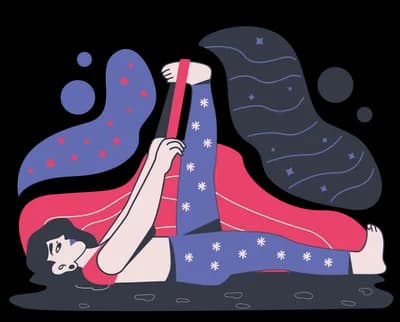
  • ·Long supported holds tend to do more for spasticity than active work does. A strap and the floor beat effort here.

And the boundary: an active relapse, needing a wheelchair, new neurological symptoms that have not been assessed, or significant sensory loss all mean neurology and physiotherapy first. There is essentially no yoga research covering those groups.

Hand made yoga sequences for MS Fatigue and Movement

Full sequences you can teach or practise today
Our yoga teachers built each of these around the same trials the guide above is based on. The order of the poses, the length of the holds and the props are not a stylistic choice. They follow what the studied programmes actually did.

If you teach, take one of them straight into your class. Every pose comes with its timing, the cue that matters and the reason it sits where it sits.

Build your own

Put together your own class for MS Fatigue and Movement

The sequence builder gives you all 108 asanas and lets you arrange them yourself. While you build, it watches the shape of the class: whether the intensity rises and falls the way a practice should, whether every strong pose gets its counterpose, and whether the order makes anatomical sense.

Save what you build, come back to it, and teach it. It is the fastest way to turn what you just read into a class of your own.

The research

What the studies actually found

This is a field where the evidence is honest about itself and the marketing usually is not. Fatigue improves, in the same range as general exercise training does. Mood improves. Quality of life domains improve. Balance and walking distance, measured directly in the cleanest controlled trial, did not differ from physiotherapy or from doing nothing. And the single largest effect in this literature comes from a humming breath practice done at home for four weeks, not from any posture. This program is built in that order.

PLOS ONE2014

Yoga for multiple sclerosis: a systematic review and meta-analysis

7 randomised trials with 670 participants. Against usual care, fatigue and mood both improved significantly. Against active exercise comparison groups there was no difference on fatigue, quality of life, mobility or cognition. When the analysis was restricted to trials at low risk of bias, only the mood effect survived, and only just. It is the most useful summary of what this practice does and does not add.

Read the source →
Annals of Neurosciences2023

Yoga vs Physical Therapy in Multiple Sclerosis: Results of Randomized Controlled Trial and the Training Protocol

56 people with relapsing remitting or secondary progressive MS randomised to twelve weeks of Iyengar yoga, physiotherapy, or a waiting list, twice a week. No significant difference between groups on the Berg balance scale, the six minute walk test or the fatigue scale. Quality of life improved significantly in the yoga group across physical functioning, vitality, mental wellbeing and social functioning. It also publishes its full pose list, which most trials in this area do not.

Read the source →
Cochrane Database of Systematic Reviews2015

Exercise therapy for fatigue in multiple sclerosis

45 trials with 2,250 people with MS, of which 26 compared exercise against a non-exercise control for fatigue. A significant effect in favour of exercise therapy, at a standardised mean difference of 0.53. That is almost exactly the same size as the yoga effect in the meta-analysis above, which is the clearest statement available that yoga is a good way to do this work rather than a uniquely effective one.

Read the source →
PubMed Central2025

The Effect of Breathing Yoga "Bhramary Pranayama" on Fatigue and Depression in Women with Relapsing Remitting Multiple Sclerosis

Women with relapsing remitting MS practised a humming breath at home, twenty minutes twice daily for four weeks, unsupervised. Fatigue and depression both fell substantially while the control group did not change, with a large effect size. It is one small trial in a narrow population, and it is the reason this breathing practice ends every session in the program.

Read the source →
Neurology2004

Randomized controlled trial of yoga and exercise in multiple sclerosis

69 people with MS randomised to six months of weekly Iyengar yoga with home practice, weekly aerobic exercise with home practice, or a waiting list. Both active groups improved on fatigue measures compared with the control group. Neither improved attention or alertness, which were the primary outcomes. No adverse events related to the intervention. It is the oldest trial in the field and its pattern has held ever since.

Read the source →
Complementary Therapies in Clinical Practice2020

The effect of yoga on the quality of life and fatigue in patients with multiple sclerosis: A systematic review and meta-analysis of randomized controlled trials

A more recent review reaching the same conclusion as the 2014 one from a larger set of trials: yoga was better than usual care for fatigue, and did not differ from exercise control groups. Two independent reviews converging on the same answer is a stronger basis than either alone.

Read the source →

Frequently Asked Questions

Does yoga help with multiple sclerosis?

For fatigue, yes. A meta-analysis of 7 trials with 670 people found it better than usual care for fatigue and mood. Compared with other forms of exercise it performed equivalently rather than better, and a Cochrane review of exercise therapy for MS fatigue found almost the same effect size. It is a good option, not a special one.

Does it improve balance or walking in MS?

The evidence does not support saying so. In the cleanest controlled trial, 56 people did twelve weeks of Iyengar yoga, physiotherapy, or nothing, and there was no significant difference between the groups on the Berg balance scale or the six minute walk. Quality of life domains improved in the yoga group, which is a different and still worthwhile result.

Why does heat matter so much with MS?

Because a rise in body temperature can temporarily worsen neurological symptoms in around three quarters of people with MS, whether the heat comes from the room or from the exertion. It typically settles within a day and it is not a relapse. Practising cool, moderately and with breaks is what makes a session sustainable.

What is the breathing practice with the big result?

Humming breath: in through the nose for about five seconds, out through the nose with a low hum for about fifteen, ten to twenty rounds. In a trial where women with relapsing remitting MS practised twenty minutes twice daily at home for four weeks, fatigue and depression both fell substantially while the control group did not change.

How do I avoid overdoing it?

Judge by the day after, not by the session. Fatigue that is worse for more than a day means the dose was too high. Halve the standing section, or do the ten minute version instead. Choosing a smaller dose is the skill this program is actually teaching.

When should I not use this?

During a relapse, if you need a wheelchair or cannot walk independently, if there are new neurological symptoms that have not been assessed, or if significant sensory loss makes it hard to tell where a limb is. The research base covers people who walk independently or with one stick, and it does not extend beyond that.

Where to next

All programs

See the other programs

Every program here was built around one complaint and around the trials that studied it. Back, neck, knees, hips, sleep and stress, each one running for as long as the research says it takes.

Browse programs →