Postpartum Core and Pelvic Floor
Yoga for Rebuilding After Birth
Your middle does not answer the way it used to. Something gives way when you sneeze, the lower back complains by four in the afternoon, and everything you read either says do planks or says never move again.
This guide is about doing it in the right order. Where the real evidence in this area comes from and where it does not, what doming is and why it decides everything, and an eight week program that starts at six weeks with three weeks of breathing.
Who this guide is for
Signs this guide was written for you
What causes Postpartum Core and Pelvic Floor
The gap can get measurably narrower without anything actually working better. That is the finding this program is designed around.
Safety
When to practise and when to get it looked at
How to practise so it works
The asanas
The yoga poses that matter for Postpartum Core and Pelvic Floor
Breath, and the deep layer




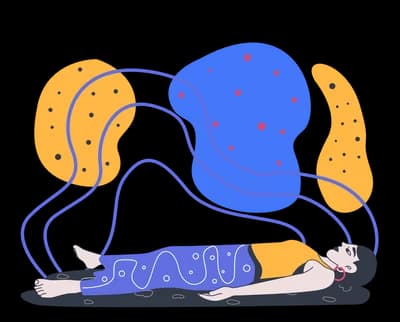
Small movements that never dome



For yoga teachers
Teaching a class for Postpartum Core and Pelvic Floor
Hand made yoga sequences for Postpartum Core and Pelvic Floor
Full sequences you can teach or practise today

Build your own
Put together your own class for Postpartum Core and Pelvic Floor
The sequence builder gives you all 108 asanas and lets you arrange them yourself. While you build, it watches the shape of the class: whether the intensity rises and falls the way a practice should, whether every strong pose gets its counterpose, and whether the order makes anatomical sense.
Save what you build, come back to it, and teach it. It is the fastest way to turn what you just read into a class of your own.
The research
What the studies actually found
Two separate bodies of evidence meet here and it is worth keeping them apart. The pelvic floor and abdominal research is large, replicated and comes from physiotherapy: a Cochrane review with nearly ten thousand women, and a meta-analysis showing structured exercise narrows the abdominal gap while not changing measured disability. The postpartum yoga research is small, heterogeneous, and mostly about mood, where it does genuinely well. This field has also produced several retracted papers, which is a reason to be careful about the more spectacular claims rather than to dismiss the area.
Pelvic floor muscle training for prevention and treatment of urinary and faecal incontinence in antenatal and postnatal women
Read the source →Core muscle strength and stability-oriented breathing training reduces inter-recti distance in postpartum women
Read the source →Non operative management of postpartum Diastasis Recti: a systematic review and meta-analysis
Read the source →Efficacy of yoga for depressed postpartum women: A randomized controlled trial
Read the source →The effects of yoga-based interventions on postnatal mental health and well-being: A systematic review
Read the source →Strenuous physical activity, exercise, and pelvic organ prolapse: a narrative scoping review
Read the source →Effect of yoga on posttraumatic growth and quality of life in first-time mothers: A randomized controlled trial
Read the source →Frequently Asked Questions
When is it safe to start postpartum yoga?
Six weeks at the earliest and only after your postnatal check, later after a caesarean or a complicated birth. The usable evidence in this area starts at day 42. The one study claiming benefit from a start in week one has been retracted, and it is not the only retracted paper in this specific field.
Can yoga fix diastasis recti?
It can narrow the gap, and narrowing the gap is not the same as fixing the problem. Across nine trials structured exercise reduced the distance by around 8 mm, more when started early. In the trials that also measured physical disability there was no difference between groups. That gap between the tape measure and daily life is why this program aims at how your middle behaves rather than at a number.
What is doming, and what do I do about it?
A ridge or cone pushing up along the centre of your abdomen when you load it. It means the pressure is going forwards through the connective tissue instead of being managed underneath. The response is always less range of the same movement, and going back to the breathing rather than pushing on.
Which exercises should I avoid after birth?
Sit ups and crunches, boat pose, planks and chaturanga in the early phase, full backbends, and end range twists, all for the same reason: they load the abdominal wall from the front where it is least able to manage the pressure. Add running and jumping to that list for the first three to six months.
Does yoga help with how I feel after birth?
This is where the direct yoga evidence is actually strongest, and it is not what the title of this program is about. In a trial of 57 women with clinically significant postnatal depression, eight weeks of yoga produced moderate to large improvements in depression, anxiety and quality of life, and 78 percent had a clinically meaningful change.
Is eight weeks enough?
It is enough to build the habit and the technique. It is not where the pelvic floor benefit shows up: the continence research measures at three to six months after birth, not at eight weeks. What you do after this program finishes matters more than what happens inside it.
Related Practices