Durga: Goddess of Power, Her Might, Legends and Traditions
Durga: Goddess of Power, Her Might, Legends and Traditions
Expert Verified by Mamta Rana
Welcome to the captivating world of yoga philosophy, a dimension in which the boundaries between the divine and the human blur and unite in a symphonic harmony of the universal. In this infinite cosmos of mythology, where every deity holds a deeper meaning and a specific purpose in creation, one goddess shines with particular intensity: Durga.
Durga, the invincible one, is not merely a figure of worship: she is a symbol of ultimate power and protection. She embodies Shakti, the primordial feminine force that forms the foundation of the universe and its dynamic energy. But who is this goddess, glorified in countless songs, stories and prayers, and what makes her so special?
In this guide you will discover:
- A deep understanding of Durga, the divine mother figure, and her universal power.
- Insights into the many manifestations of Durga and their symbolic meaning in life.
- Knowledge about the cultural and spiritual veneration of Durga and how she shapes modern spirituality.
Why we chant Om after the yoga class
In the Vedic scriptures, Durga is described as the goddess with many names, each name an echo of her many powers and virtues. She is a warrior who fights against evil with unshakable courage, a mother who surrounds her children with unconditional love and care, and a sage whose insights reveal the deepest secrets of life.
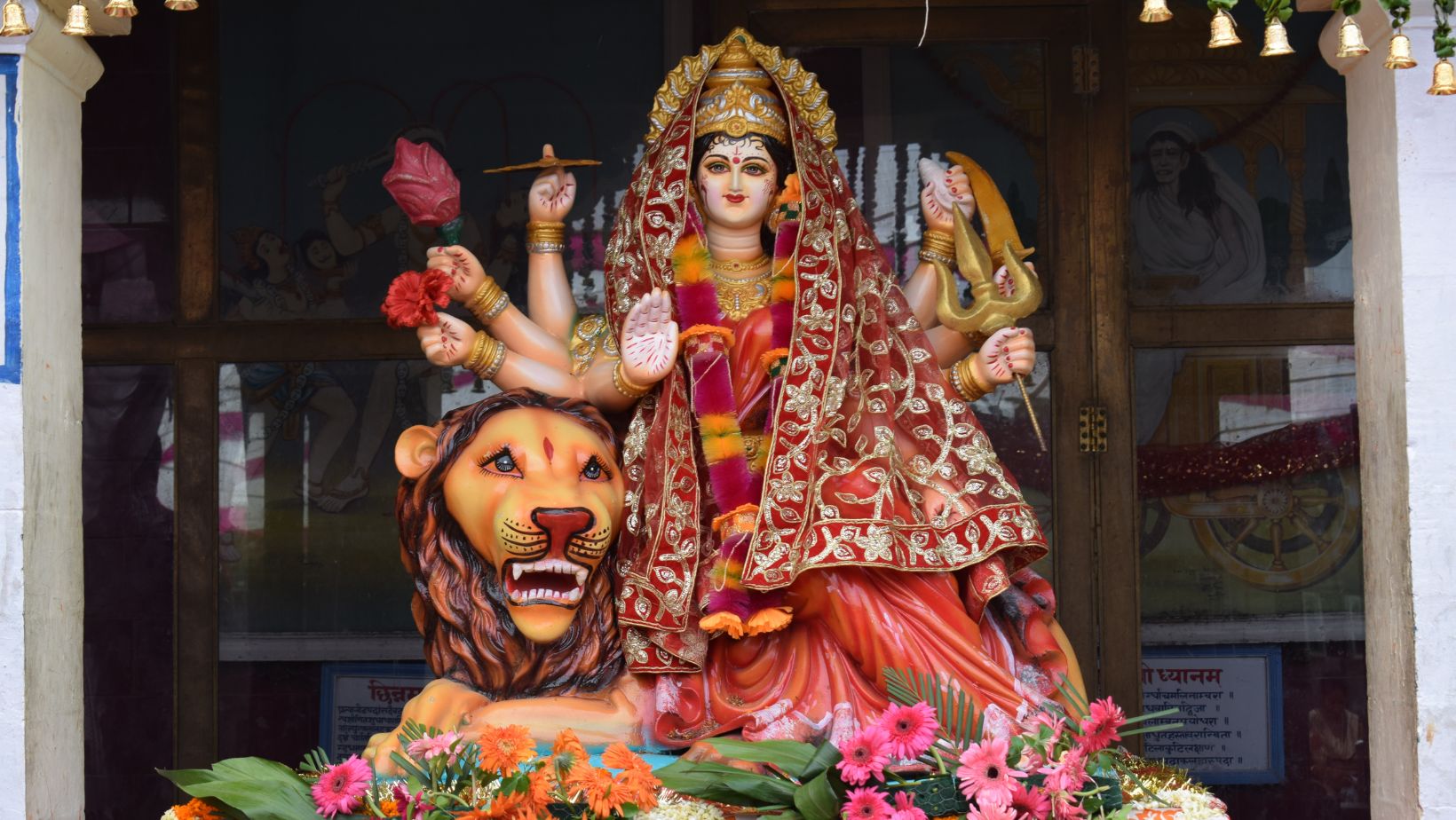
Durga, clad in radiant armor, riding her majestic lion and armed with divine weapons, is the embodiment of moral and spiritual order. She fights against the forces of darkness and chaos to preserve balance and harmony in the world. Her story is one of courage, strength and the triumph of good over evil, a narrative embodiment of the eternal struggle that rages in the hearts and souls of humanity.
But Durga is more than just a mythological figure: she is a role model, an inspiration for millions who find in her example a source of strength and comfort. She reminds us that no matter how daunting the darkness may seem, the light of justice, love and wisdom will always prevail.
With a wink, we might say that Durga is the original superheroine, but instead of a cape she wears a sari, and instead of fighting for justice on the streets of a fictional city, she does so on a cosmic scale. She is the ultimate embodiment of feminine energy, proving that true power lies in the ability to protect, nourish and renew.
Imagine the universe as a gigantic orchestra, in which every planet, every galaxy and every living being plays its own melody, together creating a harmonious masterpiece. In this cosmic concert, Durga is the conductor, whose baton controls the energies of creation, preservation and destruction. Her role in this divine spectacle is to oversee and guide the eternal cycle of life, a task she carries out with unparalleled grace and power.
Durga embodies creation itself, for she brings life forth into its manifold forms. She nourishes and sustains this life, much like a mother who cares for her children with love and wisdom. Yet she is also the destroyer, who removes what is old and corrupt to make room for what is new and pure. This destruction is not arbitrary: it is a necessary part of the life cycle that makes renewal and growth possible.
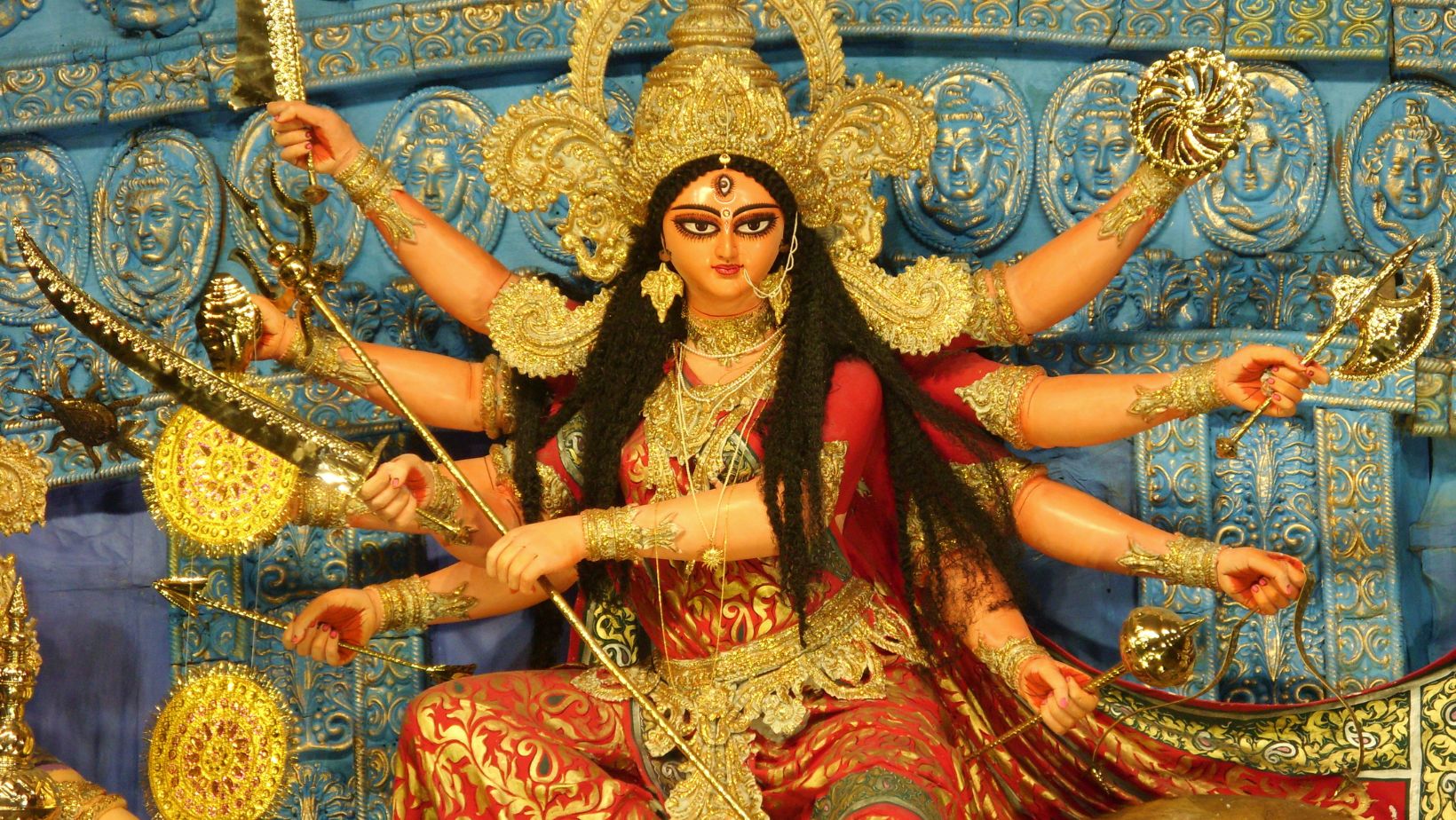
In the Vedic tradition, Durga is regarded as the highest reality, standing above the dualities of existence. She is both gentle and fearsome, loving and at the same time strict. These dynamic opposites reflect the nature of life itself, in which joy and sorrow, birth and death, are inseparably connected.
Durga teaches us that true strength does not lie in dominance over others, but in the ability to preserve the fragile balance of life. Her appearance as a warrior, armed with divine weapons, symbolises the fight against ignorance and the darkness that exists in the world and within ourselves. Yet these weapons are not directed against life: they are instruments of transformation that help us to overcome our own inner demons and reach a higher consciousness.
The message that Durga conveys to us is deep and multilayered. She reminds us that within every ending lies a new beginning and that every loss carries an opportunity for growth and renewal. In embracing these eternal truths, we find the strength to meet life's challenges with grace and courage.
Through the worship of Durga, we are invited to look beyond our limited perspectives and to recognise the divine in everything. We learn that every action, every decision, is part of the greater cosmic plan, and that by acting in harmony with this plan, we can contribute to the harmony and balance of the universe.
Just as Durga is the power behind creation and preservation, so too are we called to be creators of our own destiny, conscious and responsible in our actions, always striving to maintain balance in our lives and in the world around us.
3. The many forms and incarnations of DurgaDurga, in her infinite wisdom and power, does not choose only one form in which to walk among mortals. Like a diamond that shimmers in different colours depending on the light, Durga reveals her divine presence in many forms and aspects. Each appearance, each incarnation, carries a deep symbolic meaning and teaches us a specific lesson about life, morality and the spiritual path.
Let us begin with Kali, probably the best known incarnation of Durga, who is often misunderstood. Kali, with her fearsome appearance, is the ultimate symbol of time, of change and of the destruction of all evil. She teaches us that the end is inevitable, and reminds us to live in the present moment and to free ourselves from the bonds of fear and attachment.
Saraswati, another manifestation of the divine mother, represents wisdom, the arts and science. She inspires us to always strive for knowledge, to cultivate our creativity and to use our mental gifts for the good of all. Saraswati reminds us that enlightenment is achieved through education and the pursuit of understanding.
Lakshmi, the goddess of prosperity, happiness and beauty, is likewise a manifestation of Durga. She symbolises the abundance of life and encourages us to live in harmony with nature and to show gratitude for the countless blessings that come to us each day. Lakshmi teaches us that true wealth does not lie in material possessions, but in the quality of our relationships and our contentment with what we have.
These incarnations of Durga illustrate the versatility and depth of the divine energy. They show us that God is not confined to a single form or ideology, but offers an infinite spectrum of possibilities, lessons and paths to enlightenment.
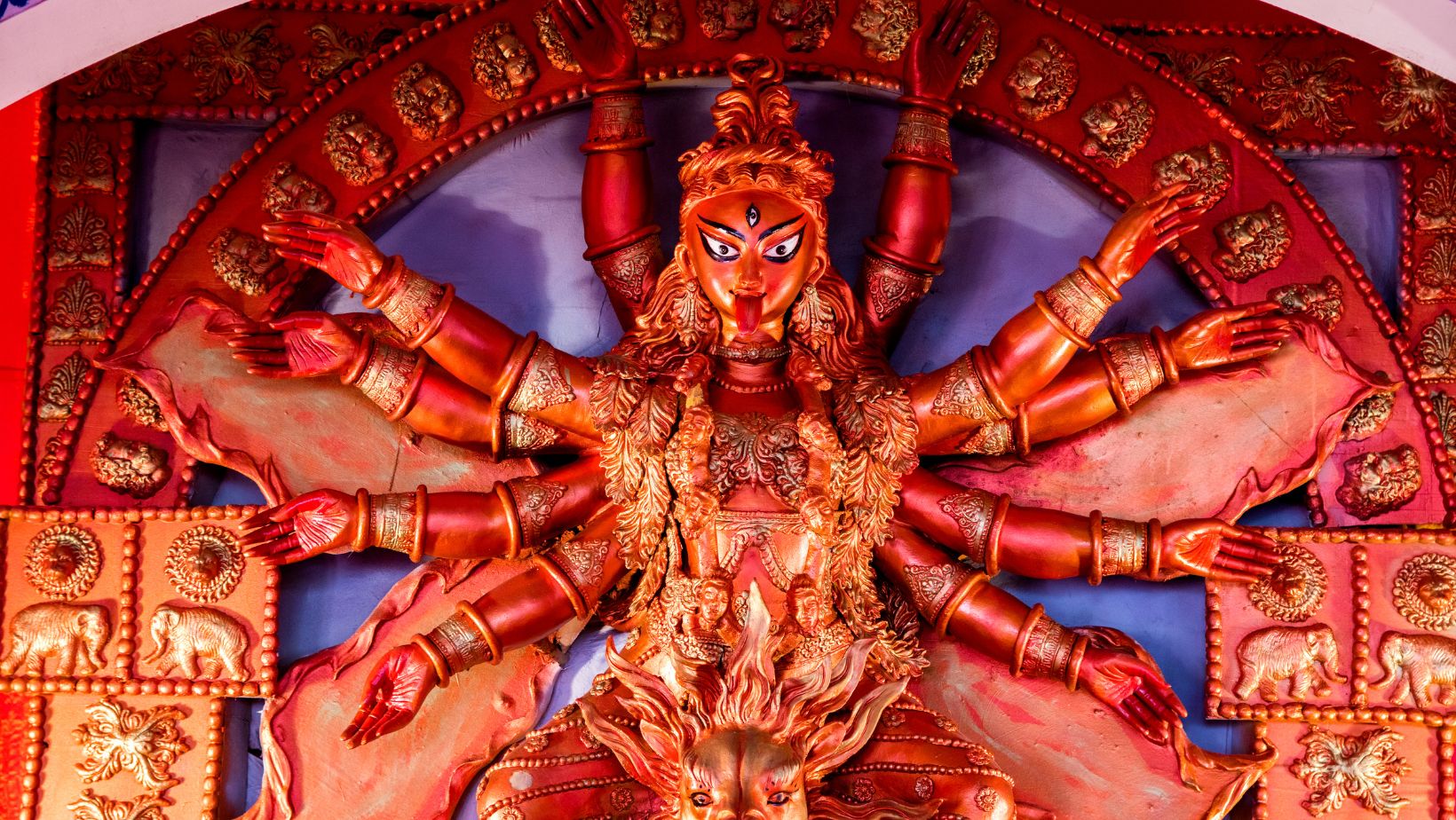
Each of these appearances of Durga carries a message of hope, strength and transformation. They encourage us to look beyond our limited self-perceptions and to recognise the infinite possibilities of our own nature. Through studying and honouring these different aspects of Durga, we can learn to lead our lives with greater wisdom, compassion and courage.
Diese Vielfalt in der Einheit ist eine kraftvolle Erinnerung daran, dass die spirituelle Reise keine Einheitslösung bietet, sondern ein individuelles Abenteuer ist, das uns dazu auffordert, unsere einzigartigen Pfade zu erkunden und zu ehren. So wie Durga sich in unzähligen Formen manifestiert, so sind auch wir aufgefordert, die Vielfalt unserer eigenen Seelen zu erkunden und zu umarmen.
This diversity within unity is a powerful reminder that the spiritual journey offers no one size fits all solution. It is an individual adventure that calls on you to explore and honour your own unique path. Just as **Durga** manifests in countless forms, you too are called to explore and embrace the diversity of your own soul. Wait, I need to translate the HTML while preserving all tags exactly. Let me redo this properly.This diversity within unity is a powerful reminder that the spiritual journey does not offer a one size fits all solution, but is an individual adventure that calls on us to explore and honour our unique paths. Just as Durga manifests in countless forms, we too are called to explore and embrace the diversity of our own souls.

Your Ultimate Prana Guide to Vitality & Life Force
4. Durga's Symbolic Meaning and Her AttributesDurga, a goddess of immeasurable complexity and depth, is depicted in the sacred scriptures and iconography with a multitude of symbols and attributes that reflect her varied roles and powers. Each of these attributes is not only a representation of her divine qualities, but also a key to understanding deeper spiritual truths.
One of Durga's most striking features is her mount, the lion or tiger, which stands for her immeasurable strength and determination. This powerful animal symbolises mastery over our own base instincts and passions. It reminds you that true power arises from control over your inner self, not from dominance over others.
In her many hands, Durga holds a variety of weapons given to her by the gods. Each of these tools carries a symbolic meaning and teaches you a lesson about the struggle of life. The sword represents the cutting clarity of the mind, capable of separating untruth from truth. The bow and arrows stand for energy that is directed and applied with intention. The trident (trishula) symbolises control over the physical, mental and spiritual world. The discus (chakra), which spins endlessly, reminds you of the cyclical nature of the universe and the need to remain constantly vigilant.
Durga is often depicted defeating the buffalo demon Mahishasura, an act that symbolises the triumph of good over evil. This image teaches you that no matter how daunting your fears and challenges may seem, you have the inner strength to overcome them.
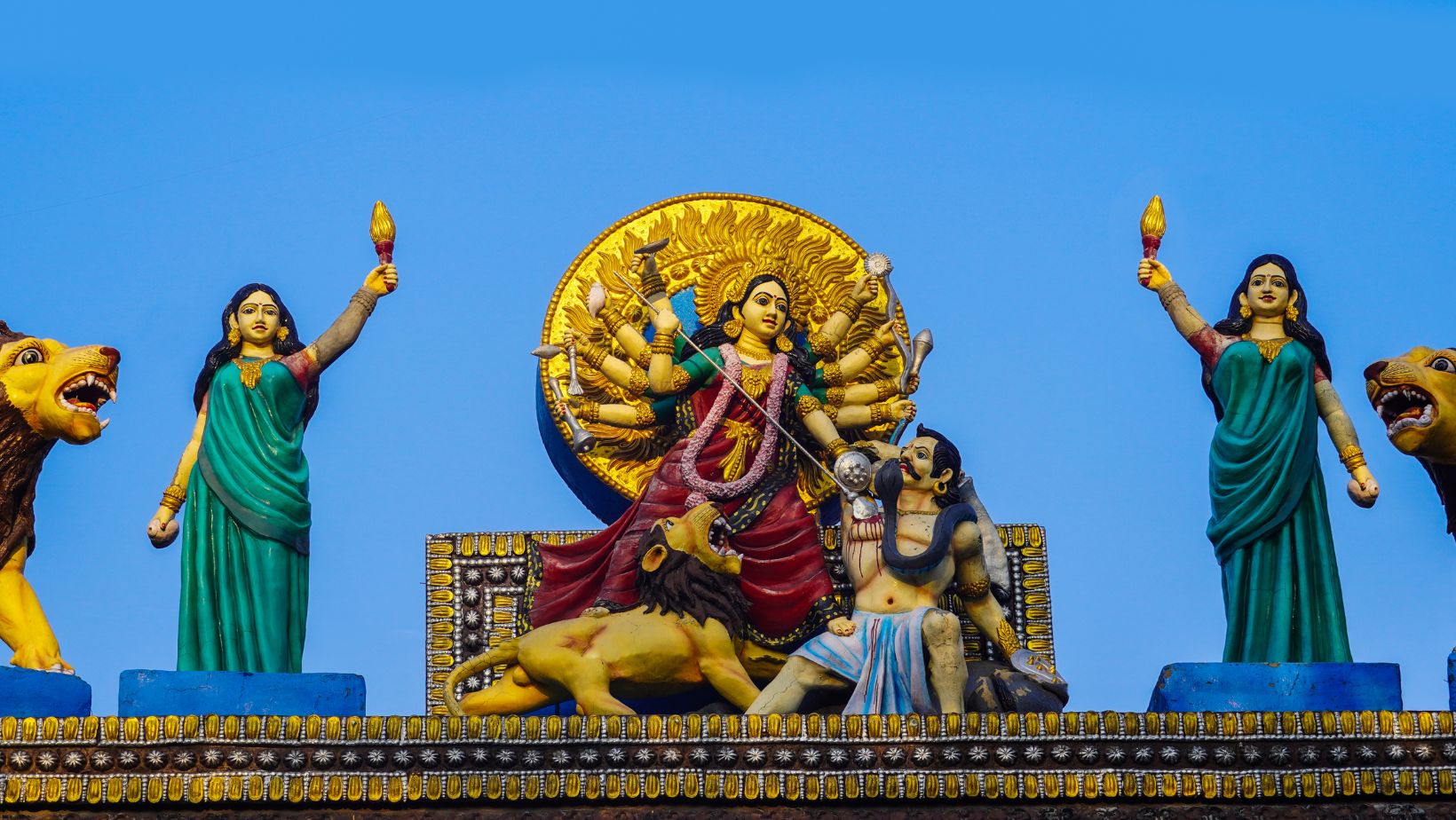
By contemplating Durga's attributes, you are reminded that every aspect of your being, body, mind and soul, can be tools on your spiritual path. Her weapons are metaphors for the various abilities you must develop to master life's challenges: courage, wisdom, self-control and unshakeable faith.
Furthermore, Durga's ten arms symbolise the omnipresence of the goddess: she can see, feel and touch everything. She reminds you that the divine is not confined to a distant heaven, but is present in every moment of your life. Her tireless vigilance and protection grant you safety on your path through darkness towards enlightenment.
In Durga, you find the ultimate symbol of feminine energy, a force that is at once protective and nurturing, challenging and uplifting. She shows you that strength and tenderness are not a contradiction, but complement each other to form a complete picture of the divine.
5. The Legend of the Battle Against MahishasuraAmong the many stories that illustrate Durga's power and goodness, the tale of her epic battle against the buffalo demon Mahishasura stands out in particular. This legend is not only a captivating part of Hindu mythology, but also offers deep insight into the duality of good and evil that exists in the world and within ourselves.
Mahishasura, blessed with the boon that no man could kill him, unleashed his chaos upon the world, convinced of his invincibility. The gods, helpless against his tyranny, turned to the goddess Durga, a manifestation of the feminine divine energy, Shakti, for help. Durga, in her infinite power and wisdom, accepted the challenge to restore the balance between good and evil.
Equipped with weapons given to her by the various gods, and riding her mighty lion, Durga confronted Mahishasura in a battle that lasted nine nights and ten days. This battle symbolises the eternal conflict between the forces of order and chaos, between enlightenment and ignorance.
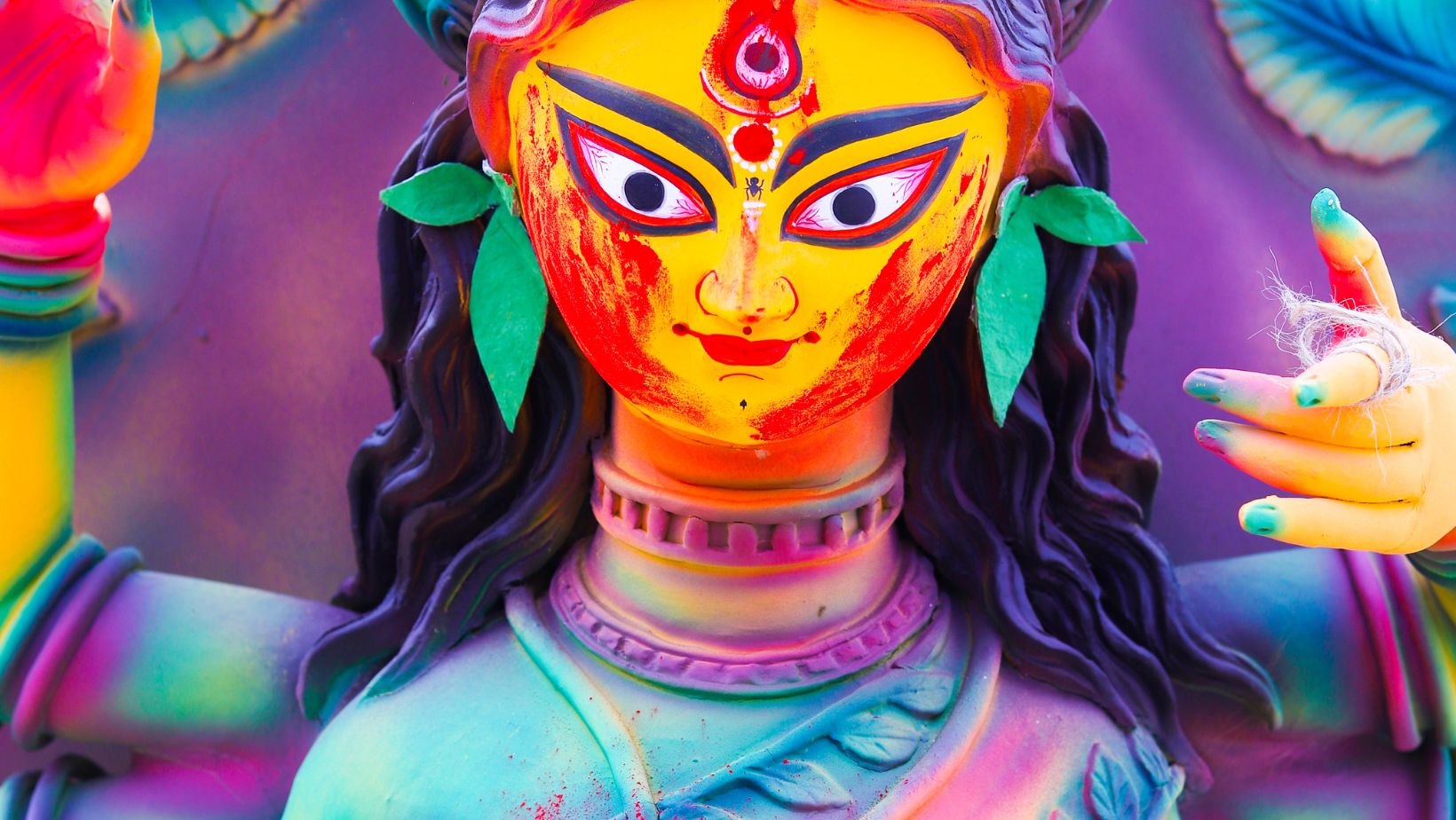
Durga's victory over Mahishasura is a powerful symbol of the triumph of good over evil. It reminds you that no matter how powerful evil may seem, goodness will ultimately prevail. This myth also teaches you that true strength arises from purity of intention and determination of mind, not from physical power or violence.
The story of Durga and Mahishasura shows you that each of us faces inner demons: fears, doubts and insecurities that prevent us from reaching our full potential. Durga teaches you to face these challenges courageously, to mobilise your inner resources and to achieve victory over your personal Mahishasuras.
Beyond this, Durga's battle against Mahishasura symbolises the necessity of fighting against injustice and oppression in the world. She inspires you to fight for what is right and to rise up against the forces that try to disturb harmony and balance.
In this epic victory, you find a source of inspiration and courage. Durga reminds you that, equipped with determination and guided by your inner light, you have the ability to overcome even the darkest challenges and to lead a life of meaning and purpose.
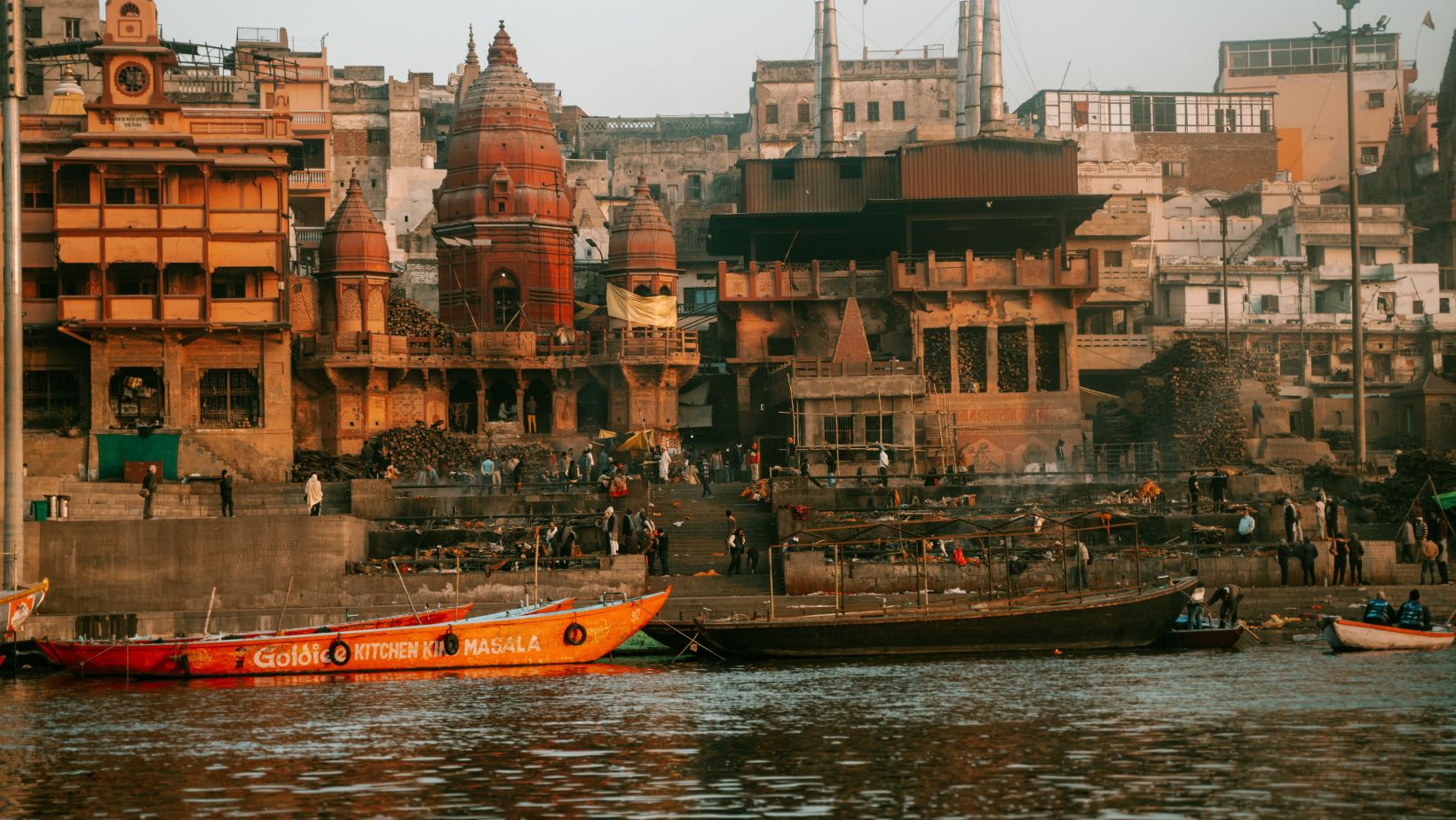
6. Durga in the Indian tradition and its significanceDurga holds a special place in Indian culture and tradition that extends far beyond the boundaries of a mere spiritual symbol. She is deeply rooted in the hearts of people, as a source of strength, courage and protection. Her veneration is reflected in numerous festivals, rites and daily practices that express the deep connection between the Goddess and her devotees.
One of the most prominent and widespread festivals in honour of Durga is Navaratri, the nine night festival that is celebrated every year. This time is especially sacred and is used to venerate the Goddess in her various forms. Each night is dedicated to a specific incarnation of Durga, highlighting the diversity of her aspects and the breadth of her divine influences.
Navaratri culminates in Durga Puja, a vibrant and colourful festival that is celebrated with particular enthusiasm in West Bengal. The depiction of Durga defeating Mahishasura stands at the centre of the celebrations, symbolised by impressive sculptures and altars dedicated to the Goddess. These festivals are not only religious ceremonies. They are also a time of community, joy and cultural expression that underlines the social and spiritual significance of Durga in Indian society.
Durga's influence also extends to the personal and inner level. She serves as an inspiration for individual strength and independence, especially for women. In many parts of India, Durga is regarded as the ultimate ideal of feminine power, embodying both tenderness and strength. Her stories and teachings offer a powerful model for self assertion and resilience, which is especially relevant in modern society.
Beyond this, the veneration of Durga reflects the deep connection between spirituality and nature that is characteristic of Hinduism. Many festivals in honour of Durga mark important agricultural cycles and seasons, which highlights the significance of the Goddess as guardian of life and fertility.
The significance of Durga in the Indian tradition goes far beyond the veneration of a Goddess. She is a symbol of unity in diversity, of overcoming adversity and of the harmonious balance between the human and the divine. In the veneration of Durga, people find not only spiritual comfort and protection, but also a deep sense of belonging and identity that strengthens and holds the community together.
7. Durga's connection to yoga and meditationThe relationship between Durga and the practices of yoga and meditation is profound and rich in symbolic meaning. These spiritual disciplines offer ways to integrate the immense energy and teachings of Durga into your personal pursuit of enlightenment and self realisation. They reveal how the divine Shakti, which Durga embodies, can be experienced in every breath, movement and moment of stillness.
Yoga: union with the divine energy
Yoga, in seinen vielfältigen Formen, ist nicht nur eine Reihe von körperlichen Übungen. It is a profound method to attain oneness with the divine. Durga, als Verkörperung der ultimativen Shakti, spielt eine zentrale Rolle in dieser spirituellen Praxis. Die Asanas (Yogapositionen) und Pranayamas (Atemübungen) im Yoga sind Werkzeuge, um unseren Körper und Geist zu reinigen und zu stärken, damit wir ein Gefäß für die göttliche Energie werden können.
In der Verehrung Durgas finden Yogis eine Inspiration für ihre Praxis, da sie Stärke, Flexibilität und Ausdauer verkörpert, Qualitäten, die für die Ausübung von Yoga wesentlich sind. Darüber hinaus spiegelt die Hingabe an Durga das Bhakti-Yoga wider, den Weg der Hingabe, der uns lehrt, unser Ego zu überwinden und uns selbst dem Göttlichen hinzugeben.
Meditation: Die Begegnung mit der inneren Durga
Die Praxis der Meditation ermöglicht es uns, eine tiefe Verbindung mit Durga herzustellen, indem wir unser inneres Bewusstsein erweitern und unsere Gedanken zur Ruhe bringen. In der Stille der Meditation können wir die Präsenz der Göttin in unserem Herzen fühlen und ihre Führung und Inspiration empfangen. Diese Momente der stillen Kommunion mit Durga ermöglichen es uns, unsere eigenen inneren Stärken und Ressourcen zu entdecken und zu kultivieren.
Integration in die spirituelle Praxis
Die Integration Durgas in Yoga und Meditation ist nicht nur eine Übung der Verehrung. It is a way to embrace the dynamic of divine energy in daily life. Indem wir Durga in unsere Praxis einladen, eröffnen wir uns der Möglichkeit, Transformation und Erleuchtung zu erfahren. Sie lehrt uns, mit Anmut und Mut zu leben, unsere Ängste zu überwinden und unseren Geist zu befreien.
In conclusionDie Verbindung zwischen Durga, Yoga und Meditation zeigt uns, dass Spiritualität nicht von unserem täglichen Leben getrennt ist. Vielmehr ist sie eine tiefgreifende Einladung, in jedem Moment bewusst zu leben, die göttliche Präsenz in uns selbst und in der Welt um uns herum zu erkennen und zu ehren. Damit haben wir das Ende unseres Durga Guides erreicht. Ich hoffe, dieser Artikel war informativ und inspirierend für dich. Wenn du Fragen hast oder weitere Informationen benötigst, zögere nicht, mich zu kontaktieren. Viel Spaß beim praktizieren.
Namaste
The Author

Note: Some of the links in this article may be affiliate links, which can bring us compensation at no cost to you if you decide to buy something. These are products that we have personally used and stand behind. This website is not intended for financial advice, it is only for entertainment purposes. You can read the disclosure of our partners in our privacy policy.
More articles from this category
Die Bedeutung des Svadhisthana Chakras
Learn the meaning of 108 in our learning tools.
Was ist das Muladhara Chakra?
Learn the meaning of 108 in our learning tools.
Was ist Ahimsa
Learn 5,000-year-old wisdom in fast forward. Here you will find out what ahimsa is.