Asanaverse

Draft. This guide is a placeholder, the text and the practice are still being written. Nothing here is medical advice yet.

Chronic Lower Back Pain

Yoga for Lower Back Pain That Keeps Coming Back

This guide is still being written. What is finished is the part that has to be right before anything else: the safety notes, the research this topic actually rests on, and the 12 week program built from it.

What is still missing is the pose by pose commentary and the questions people ask most. Nothing on this page is medical advice.

The pain is not new. It settles for a few weeks, then returns, and by now you move differently to avoid it.

Before you start

Yoga for back pain has a good safety record. Across 21 trials the Cochrane review found no serious harms, and the risk of side effects was similar to other exercise programs. The most common side effect was increased back pain, which usually settled. What matters more than that is the small number of situations where back pain is a signal of something else, and where a movement program is simply the wrong first step.

See a doctor first if any of this applies

  • ·The pain started with a fall, an accident or a lifting injury, or it came on suddenly with no explanation.
  • ·It travels down one leg past the knee, or you have numbness, pins and needles, or weakness in a leg or foot.
  • ·Anything has changed about bladder or bowel control, or you have numbness around the groin or inner thighs. This one is urgent and needs same day attention.
  • ·The back pain comes with fever, unexplained weight loss, or you have a history of cancer, osteoporosis or long term steroid use.
  • ·It is worse at night or at rest and does not ease when you change position.

None of this means you cannot practise yoga. It means the first step belongs with someone who can examine you, not with a page written for a general reader.

If none of that applies, practise like this

  • ·Soreness in the muscles a day or two after a session that asked more is expected. It is not the pain you came here about, and it settles.
  • ·Sharp pain, or pain that spreads into a leg, is a signal to come out of the pose rather than to breathe through it.
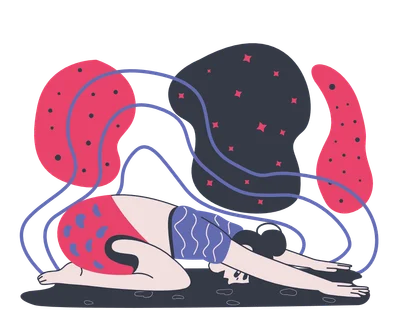
  • ·Bend the knees generously in every forward fold. Hamstrings working too hard pull on the pelvis and hand the work straight back to the lower back.
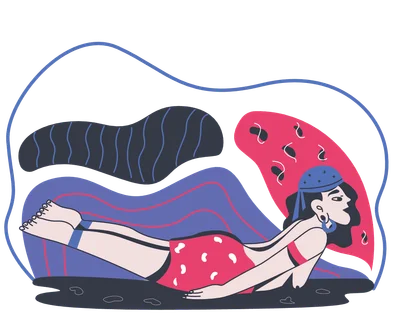
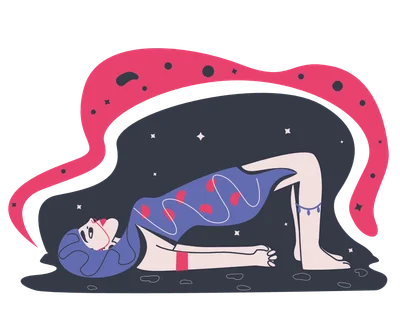
  • ·In Locust and Bridge, small and controlled beats high and strained. Height is not what builds the strength.
  • ·If a flare comes, and for most people one does at some point, go back to the gentle floor sequence for a week instead of stopping altogether.
  • ·Nothing on this page is medical advice. If you are being treated for your back, show your practitioner the plan before you start.

Ready to practice

Chronic Lower Back Pain sequences you can follow today
Full practices with timings, cues and the reason each pose sits where it does. Pick the one that matches the time you actually have.

Ten Minutes for a Stiff Lower Back

10 min · Beginner

Ten Minutes for a Stiff Lower Back

The short practice for the days between

This is the practice for the days you would otherwise skip. Ten minutes, all of it on the floor, and no decision to make once you have started. It is not a smaller version of a real session. It has its own job: keeping the gap between two proper practices short enough that the body does not go back to its old setting. A back changes because you asked often, not because you asked hard.

Go to sequence →
Bridge, Locust and Chair for a Stronger Back

15 min · Beginner

Bridge, Locust and Chair for a Stronger Back

Fifteen minutes of the three poses that build capacity

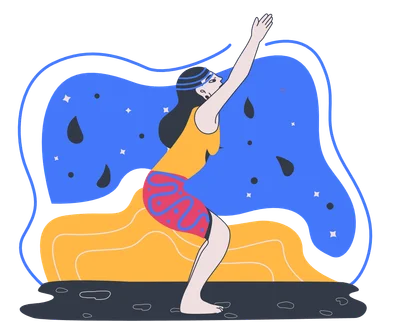
Three poses, done in sets, plus enough around them that you are warm first and settled after. This is the short practice for the middle of the program, and unlike the ten minute floor sequence it is not a rest day practice. It asks for effort. Bridge for the hips, Locust for the muscles alongside the spine, Chair for the pattern you use every time you pick something up. Fifteen minutes is enough because the poses are repeated rather than held once.

Go to sequence →
Fifteen Minutes to Keep What You Built

15 min · Intermediate

Fifteen Minutes to Keep What You Built

The standing practice for after the program

This is the practice that outlives the twelve weeks. Everything that made the difference, in the shortest form it still works in: a hinge, a lunge, a standing pose, a squat, two strengthening poses and a twist. Fifteen minutes, once or twice a week, is roughly what it takes to hold what three months of work built. It is much easier to keep a back than to get it back.

Go to sequence →
Gentle Yoga for Lower Back Pain

25 min · Beginner

Gentle Yoga for Lower Back Pain

Twenty-five minutes on the floor, nothing that asks for trust you do not have yet

A back that has hurt for months moves less than it can. Not because it is damaged, but because it has learned to guard. This sequence starts where guarding is cheapest to undo: lying down, where the spine does not have to hold you up while it moves. Small movements first, then support, then a little more range. Nothing here is a stretch you have to earn. The aim of these twenty-five minutes is one message, repeated often enough to land: this movement is available, and it did not cost anything.

Go to sequence →
Yoga for Lower Back Strength

35 min · Beginner

Yoga for Lower Back Strength

Thirty-five minutes where the back starts working instead of only resting

By week five the point changes. The first weeks were about movement being available again. This one is about capacity. A back that only ever gets stretched and rested stays exactly as strong as it was, and the thing that makes daily life hard is usually not stiffness. It is that lifting, carrying and standing for an hour cost more than they used to. So this practice adds standing poses, and it adds Bridge, Locust and Chair in sets, which is closer to training than to stretching. That is on purpose.

Go to sequence →
Standing Yoga for a Back You Trust Again

40 min · Intermediate

Standing Yoga for a Back You Trust Again

Forty minutes of transitions, balance and load for the last four weeks

The last phase is not about adding more poses. It is about putting them together. Real life does not ask you to hold a shape for a minute. It asks you to get up, turn, reach, carry something and put it down, and that is where a back that has hurt for a long time still hesitates. So this practice moves between poses rather than parking in them, adds balance, and finishes with the strength work you already know. By the end of week twelve the aim is not that nothing ever aches again. It is that you know what to do about it on your own.

Go to sequence →

Build Your Chronic Lower Back Pain Practice

Get my practice

The research

What the studies actually found

These are the studies and guidelines the practice guide and the 12 week program are built on, including the ones that found less than you might hope. The short version: yoga is a well studied form of structured exercise for chronic nonspecific low back pain, it beats doing nothing, and it performs about the same as other good exercise programs. That is a real finding and it is worth more than a bigger claim would be.

These links go to the original publications. Nothing on this page is medical advice, and none of these studies were carried out on this website or its programs.