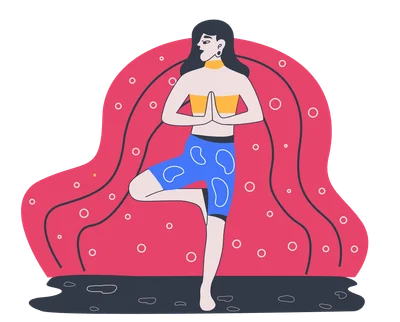
Vrkasana
Tree Pose
Root down with us in Vrksasana Uncovered. Like a mighty tree standing firm against the urban hustle, Tree Pose brings a union of grounding and growth into your city life. Let us together discover the balance and calm of this standing pose, which fosters your steadfastness while stretching your branches upward toward sunlight and dreams.
Category: Extensions
Extensions are asanas in which you gently stretch muscles and joints. They promote suppleness and mobility. Breathing in Extensions has a relaxing effect: you supply your muscles with oxygen and release tension.
VAYUS
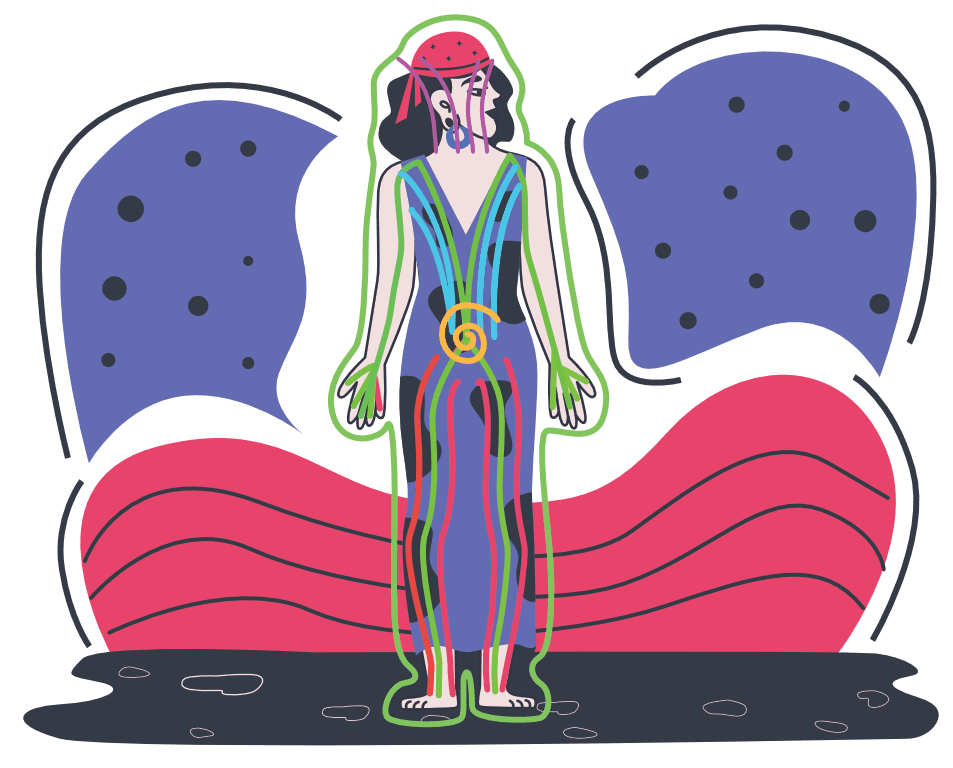
Each of the five Prana Vayus plays an essential role in our body and mind. They move and direct energy in specific directions, each with its own special area of influence and function. Tree Pose has its own unique effects on these vayus.
Udana Vayu
▼
The upright posture and the forward gaze activate Udana Vayu, the ascending energy that provides stability and clarity. This energy supports balance and the feeling of lightness in the pose.
Vyana Vayu
▼
Vyana Vayu, the energy that distributes throughout the entire body, is stimulated in Vrksasana by the demand for balance and the spreading of the arms. This promotes the harmonious distribution of energy and supports the integration of stability and flexibility.
Prana Vayu
▼
The calm, deep breathing in Vrksasana activates Prana Vayu, the energy centered in the chest that stands for the intake of life energy. This fosters vitality and presence in the pose.
CHAKRAS
Muladhara Chakra (Root Chakra)
▼
Through the firm grounding of the standing leg, Vrksasana activates the root chakra. This connection to the earth fosters stability, safety and a strong foundation, both physically and energetically.
Svadhisthana Chakra (Sacral Chakra)
▼
The balance and the opening of the hips in this pose stimulate the sacral chakra. This chakra stands for creativity, flexibility and emotional balance, which are fostered by the pose.
Ajna Chakra (Brow Chakra)
▼
The Ajna Chakra is activated by the focus and concentration required for balance. It supports inner clarity, intuition and mental alignment, which is consciously cultivated in Vrksasana.
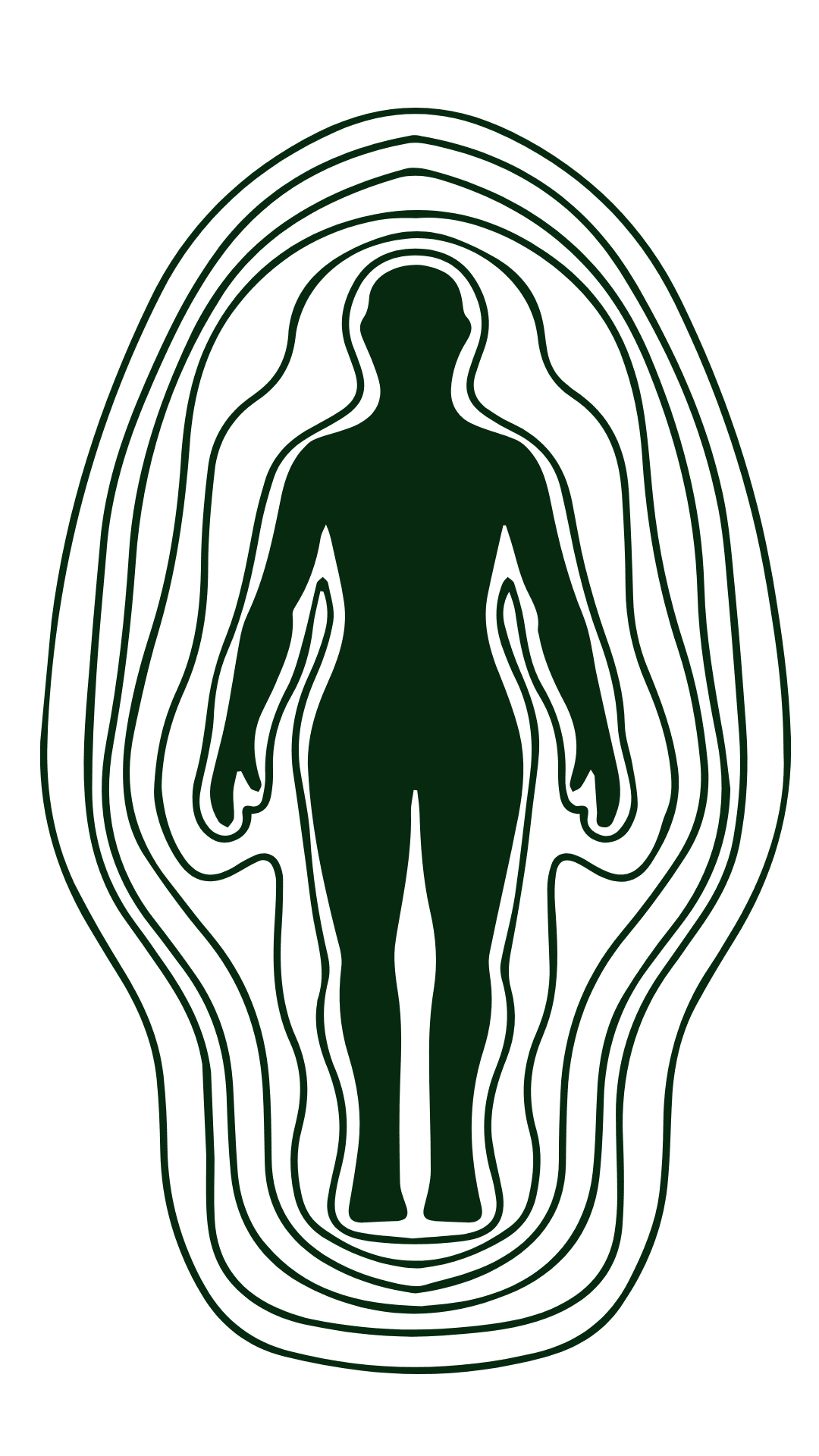
KOSHAS
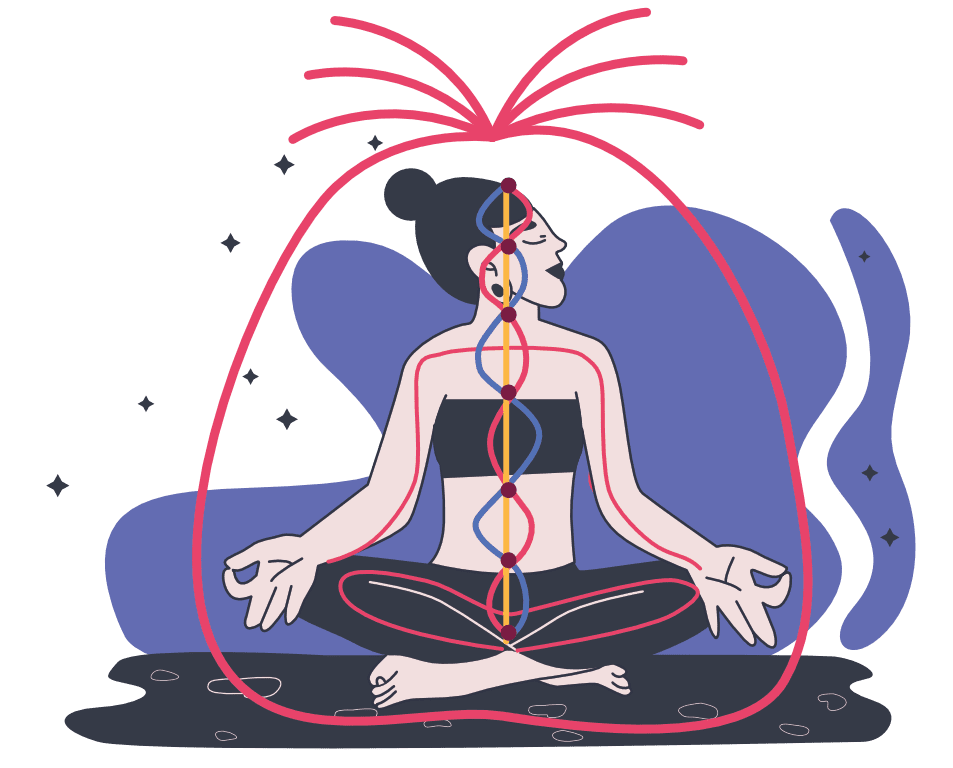
Annamaya Kosha (Physical Body)
▼
Annamaya Kosha is the physical layer of our being, concerned with the material dimension of the body. Vrksasana works on this layer by strengthening the muscles of the legs, hips and torso and improving physical balance.
Pranamaya Kosha (Energy Body)
▼
Pranamaya Kosha refers to the energy body and is connected with the flow of prana (life energy) through our energetic channels. Vrksasana stimulates the Pranamaya Kosha by improving the circulation of prana, especially through the balance and concentration required to hold the pose.
Manomaya Kosha (Mental Body)
▼
Manomaya Kosha comprises the mental aspect of our being, including thoughts, emotions and psychological patterns. The concentration and mindfulness required in Vrksasana can help calm the mind and foster emotional stability.
Vijnanamaya Kosha (Intellectual Body)
▼
Vijnanamaya Kosha refers to the level of wisdom, intuition and higher understanding. Vrksasana challenges cognitive function through the demand for balance and physical coordination. These challenges can help sharpen inner insight and body awareness.
Anandamaya Kosha (Spiritual Body)
▼
Anandamaya Kosha is the subtlest layer, connected with joy, peace and spiritual well-being. Vrksasana can foster this aspect through the sense of accomplishment and the meditative quality of balance.
DOSHAS
Vata
▼
Vrksasana offers a balance between grounding and stability, so it neither increases nor decreases Vata. The pose calms the mind and brings centered calm without dampening the mobile and creative element of Vata. With conscious breathing, Vata stays harmoniously balanced.
Pitta
▼
The concentration and focus necessary for Vrksasana foster inner balance without excessively stimulating fiery Pitta. The pose teaches patience and fosters clarity, keeping Pitta in a balanced state.
Kapha
▼
Vrksasana requires muscle activation and stability, which reduces the sluggish and stagnant energy of Kapha. The uprightness of the body and the conscious balance foster lightness and movement, breaking down Kapha dominance. Ideal for overcoming Kapha-related heaviness.

Key Information for Correct Execution
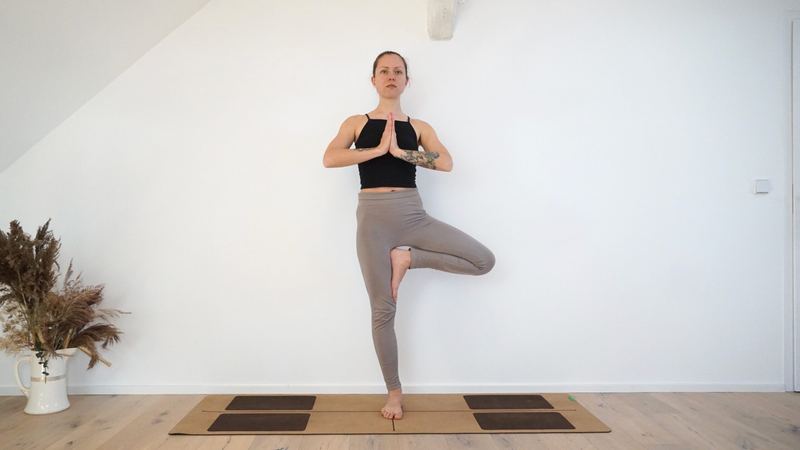
Meet Geraldine, a certified yoga teacher and psychology student who emphasizes mindfulness and alignment to inspire people toward a more peaceful life.
Common Mistakes
Common mistakes are pressing the foot against the knee, the knee caving inward, and an unstretched upper body.
Our Tip
Keep your gaze fixed on a steady point (drishti) to hold your balance. Root the foot of your standing leg especially through the big toe and draw yourself energetically upward through the crown of the head toward the sky.
Variations
As a beginner you can place the foot on the calf if the hips are not yet so open. Take care not to place the foot against the knee. As an advanced variation you can move into a half lotus and additionally bind the foot with the arm behind the body.
Physical Effect
Balance and Proprioception
Vrksasana, Tree Pose, improves balance and proprioception, the body's awareness in space. Standing on one leg strengthens the muscles of the foot, ankle and calf, which are essential for stabilization and balance. This activation fosters not only coordination but also the neural connection between the brain and the lower extremities, which is especially important for preventing falls.
Hip Opener and Stabilizer
Vrksasana works on the flexibility and strength of the hips. The raised leg is held in a hip-opening position, which stretches the adductors and the inner thigh muscles. At the same time, the muscles of the standing leg, including the gluteus maximus and the lateral hip stabilizers, are strengthened. This combination of stretching and strengthening supports the healthy function of the hip joints.
Core and Spinal Stabilization
Maintaining the vertical posture in Vrksasana requires active involvement of the core muscles. The abdominal muscles, especially the transversus abdominis, as well as the back muscles, including the erector spinae, are engaged to stabilize the spine and maintain an upright posture. This kind of stabilization is essential for the structural support of the spine and can help prevent back pain.
Effects on Psyche and Emotions
Balance and Focus
Vrksasana, Tree Pose, requires a high degree of concentration to maintain balance. This focused attention can improve mental clarity and free the mind of distracting thoughts.
Grounding and Stability
Through the steadiness in Vrksasana, a feeling of grounding is fostered, which has a calming effect on the nervous system and contributes to emotional stability.
Self-Confidence and Growth
The pose symbolizes the growth and strength of a tree. Successfully holding Vrksasana can increase self-confidence and foster a sense of inner strength.
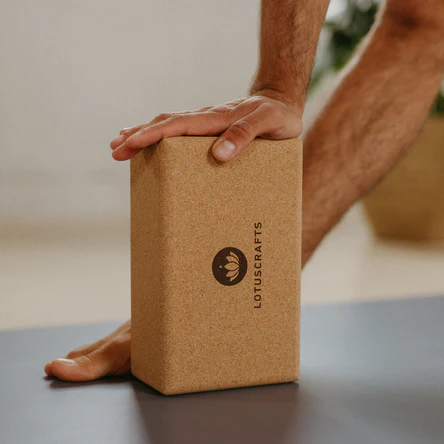
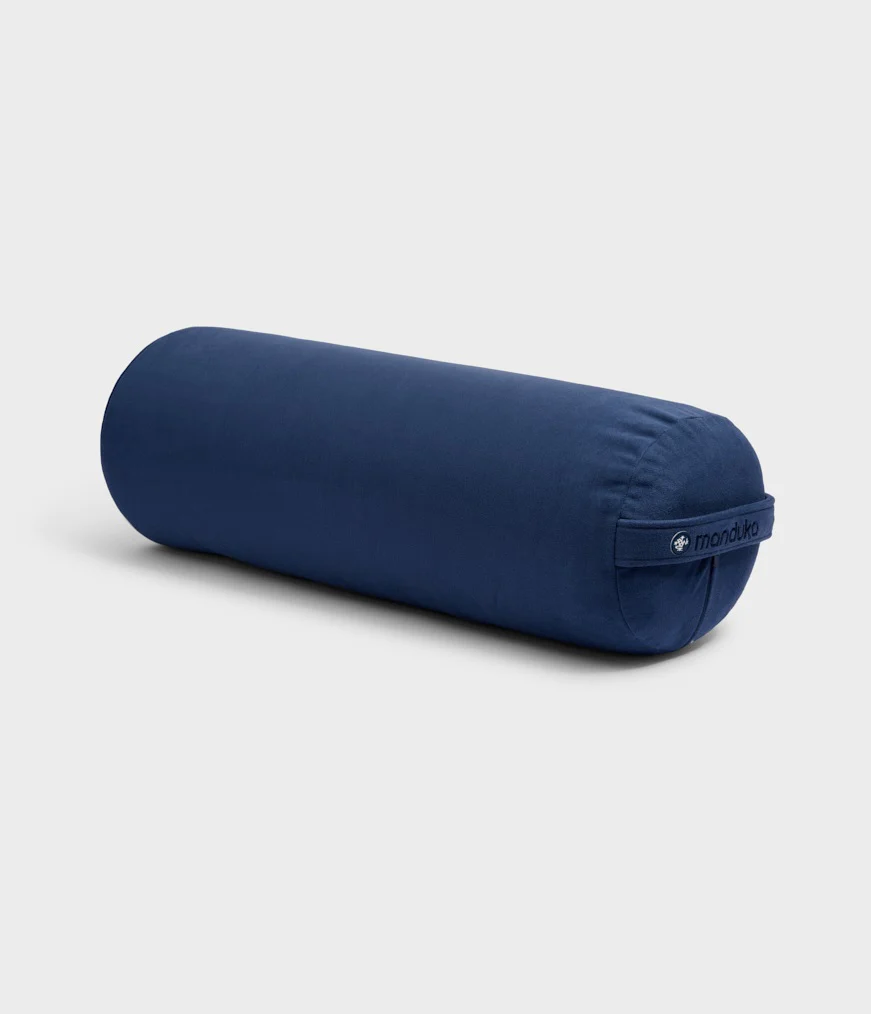
Props
Also interesting!
Author of this Asana
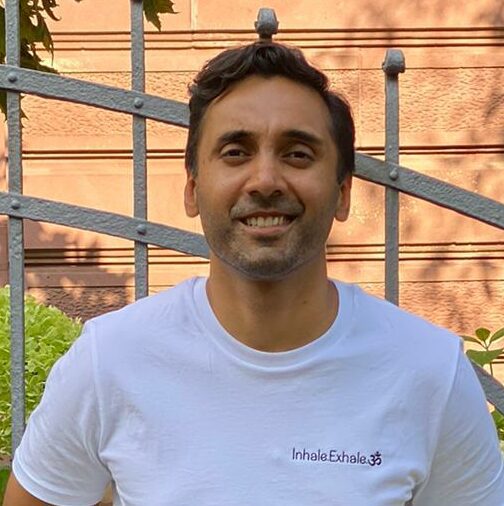
Manish Rana is a certified yoga teacher and founder of asanaverse.de. He writes about topics around yoga, ayurveda and meditation. Manish owes his deep connection to yoga to his Indian roots, through which he came into contact with this practice early on.
Learn more about our team here →DISCOVER MORE
More Extensions
Get our free ebook with 108 asanas now!
With great care and passion, we have selected and described 108 of the most important asanas for you in detail!
Perfect for your practice and cues ;)
Thank you for being here!
Thank you for being here and being part of this ever-evolving platform! We strive to keep growing and improving.
Your feedback is invaluable. Namasté 🙏
Comments feature coming soon. 💬
Guide
Browse our guide now
Accessible Yoga Mobility: Chair Yoga and Inclusive Asanas for All Bodies
Ahimsa – Gewaltlosigkeit als Fundament des Yoga und Lebens
Yoga Sutras zusammengefasst – Kapitel 2 (Sadhana Pada): Pfad der Praxis
Meditation bei Überforderung und Angststörung: Achtsam bleiben in turbulenten Zeiten
12 Wege, das Sitzen in der Meditation zu erleichtern — Stabiler sitzen, tiefer meditieren
Brahmacharya: Quelle des Lebens für mehr Lebenskraft und Vitalität