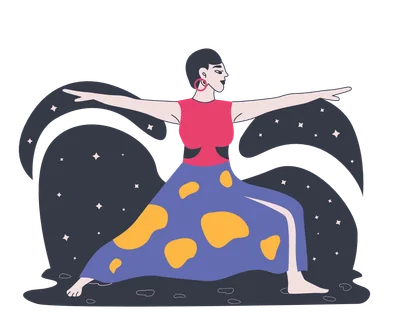
Virabhadrasana II
Warrior II
Greetings, steadfast urban yoga fighters! Step with us into the heroic arena of our Virabhadrasana II Uncovered. Like a warrior unwaveringly ruling the urban battlefield, this Warrior II pose brings concentration and endurance into your urban life.
Category: Extensions
Extensions are asanas in which you gently stretch muscles and joints. They promote suppleness and mobility. Breathing in Extensions has a relaxing effect: you supply your muscles with oxygen and release tension.
VAYUS
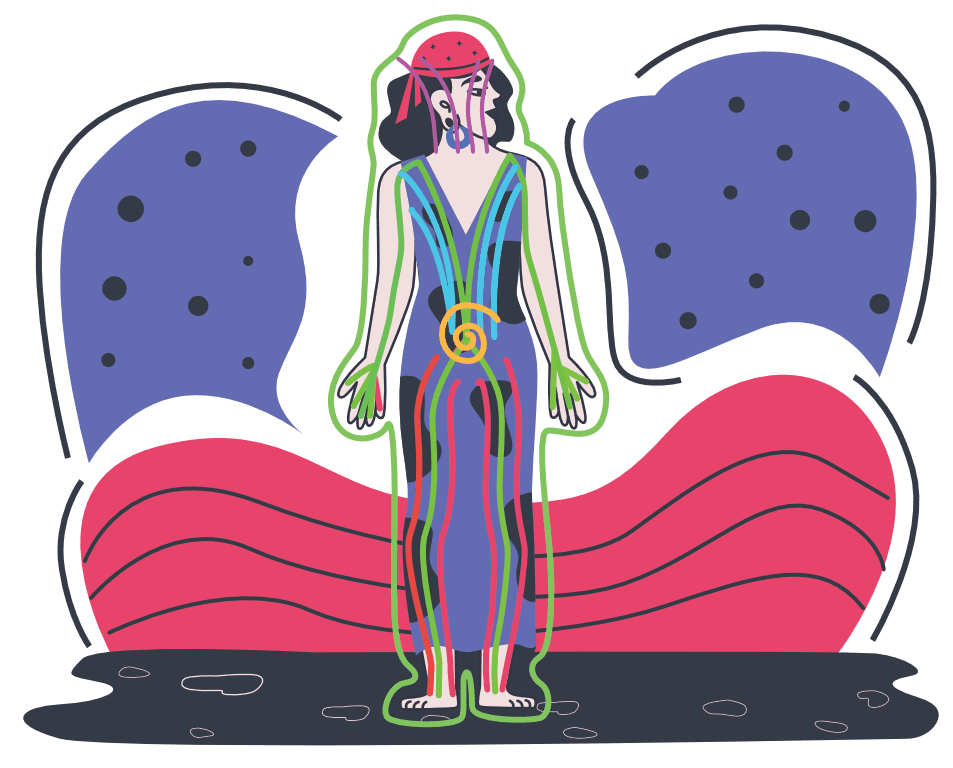
Each of the five Prana Vayus plays an essential role in our body and mind. They move and direct energy in specific directions, each with its own special area of influence and function. Warrior II has its own unique effects on these vayus.
Udana Vayu – The Uplifting One
▼
The Warrior Pose II, Virabhadrasana II, brings Udana Vayu, which is seated in the throat and head area, into the spotlight. This asana can improve communication skills and strengthen self-confidence, as Udana Vayu fosters expressiveness and positive thinking. Think of a singer trembling with stage fright – the warrior pose could bring out her inner strength and fill her with the necessary determination.
Prana Vayu – The Ascending One
▼
Virabhadrasana II also works on Prana Vayu, which is seated in the chest and the heart. The asana can improve the breathing capacity, as Prana Vayu controls the intake of energy. Imagine a sprinter who wants to improve her breathing capacity. Through the practice of Virabhadrasana II, she could experience an improved energy supply and performance.
Vyana Vayu – The Integrating One
▼
Vyana Vayu, which is distributed throughout the entire body, is stimulated through the warrior pose II. The pose can help improve balance and coordination, as Vyana Vayu is responsible for the integration of movements. A dancer who wants to improve their presence and balance on stage could practice this asana to achieve a more fluid choreography.
CHAKRAS
Muladhara Chakra (Root Chakra)
▼
Virabhadrasana II begins with a powerful grounding through the legs, which are anchored deep in the floor. This posture activates the Muladhara Chakra, which stands for stability, safety and connectedness with the earth. The strong base that arises through the alignment of the feet and legs strengthens the feeling of trust and steadfastness, both physically and energetically.
Anahata Chakra (Heart Chakra)
▼
The opened chest and the spread arms in Virabhadrasana II stimulate the Anahata Chakra. This energetic opening of the heart fosters compassion, strength and the ability to radiate love and acceptance. The Warrior II invites you to open the heart while at the same time remaining in a state of courage and determination.
Ajna Chakra (Brow Chakra)
▼
The focused gaze over the front hand, held in Virabhadrasana II, activates the Ajna Chakra. This chakra, representing intuition and mental clarity, is strengthened through the focus on a fixed point. It supports the ability to make decisions with foresight and inner alignment and to establish the connection between inner and outer strength.
KOSHAS
Annamaya Kosha (Physical Body)
▼
This is the physical body, which is nourished through food and movement. Virabhadrasana II works on the deep muscles of your thighs and hips and fosters strengthening and flexibility. It also helps improve balance. Imagine an athlete who practices this asana to increase their physical condition and performance.
Pranamaya Kosha (Energy Body)
▼
The energy sheath, Pranamaya Kosha, is defined through the flow of prana or life energy. Virabhadrasana II encourages a deep, stable breath that distributes prana throughout the entire body. A stressed office worker could experience an even flow of prana through the practice of this asana, which leads to more energy and less exhaustion.
Manomaya Kosha (Mental Body)
▼
This is the sheath of thinking and feeling. Through the concentration and mental endurance needed in Virabhadrasana II, the activity of this kosha can be strengthened.
Vijnanamaya Kosha (Intellectual Body)
▼
The sheath of knowledge and wisdom is Vijnanamaya Kosha. The intense alignment and presence in Virabhadrasana II foster awareness and mindfulness.
Anandamaya Kosha (Spiritual Body)
▼
The deepest sheath, Anandamaya Kosha, is the source of joy and bliss. The practice of Virabhadrasana II can lead us into this state of inner peace and joy.

DOSHAS
Vata
▼
The steadfastness and grounding in Virabhadrasana II offer a stable base that calms the often scattered and unsteady Vata. The powerful alignment of the legs and the connection to the floor foster a feeling of safety and centering, whereby the mobility and lightness of Vata are harmonized.
Pitta
▼
Virabhadrasana II also has a balancing effect on the fiery Pitta, as the posture requires patience, precision and inner calm. The heart opening and the focus on the breath help cool the Pitta heat and cultivate a calm determination without fostering excessive ambition.
Kapha
▼
The powerful and energetic nature of Virabhadrasana II stimulates the flow of energy and reduces the typical Kapha qualities such as sluggishness and heaviness. The active posture enlivens the entire body and fosters alertness and lightness, which counteract Kapha dominance.

Key Information for Correct Execution
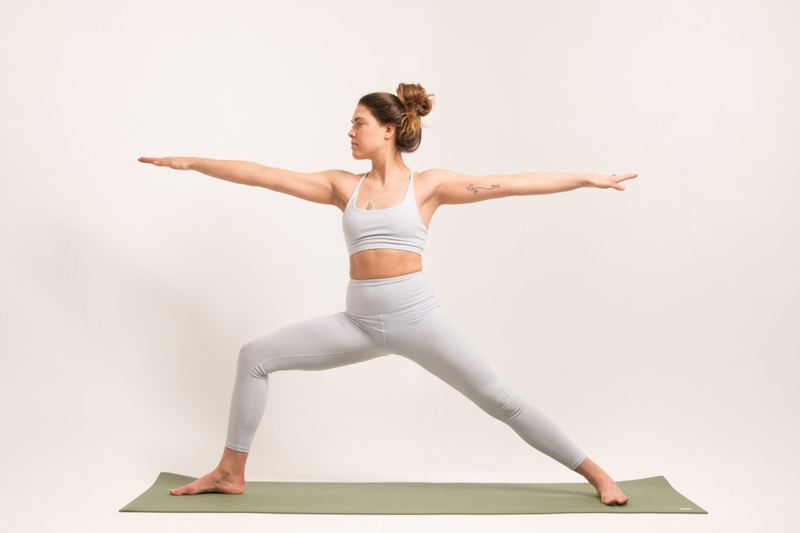
Meet Geraldine, a certified yoga teacher and psychology student who emphasizes mindfulness and alignment to inspire people toward a more peaceful life.
Common Mistakes
Upper body falls forward, arms are not powerfully extended.
Our Tip
The front knee should be bent so deep that we could place an espresso cup on it. Yes, exactly that far we want to bend the front leg. That makes firm thighs, ladies and gentlemen.
Variations
If your hips feel tight and your front knee tends to fall inward, rotate your back foot a little more inward (up to 45 degrees) so that your back thigh is also rotated further inward. That makes it easier for you to rotate your front knee outward.
Physical Effect
Strengthening the Leg Musculature
The hero pose II, Virabhadrasana II, requires a deep bend of the front knee, which intensely engages the quadriceps, hamstrings and gluteal musculature. This strengthens and tones these muscles and can thus help improve stability and balance and support the function of the knee joint. This asana is therefore especially useful for people who want to increase their leg strength or ease knee problems.
Opening the Hips
Through the lateral alignment of the back foot and the bending of the front knee, Virabhadrasana II opens the hips in a powerful way. This opening affects the hip flexors, the piriformis and the inner thigh muscles, which can lead to an improved mobility and relief of hip stiffness. This asana can therefore be especially beneficial for people with sedentary lifestyles, in whom hip stiffness frequently occurs.
Strengthening the Upper Body
In Virabhadrasana II, the arms are extended horizontally and the shoulders stay relaxed. This posture activates the musculature of the upper back, especially the trapezius, the rhomboid and the latissimus dorsi, as well as the shoulder musculature such as the deltoid. It strengthens and tones these muscles and can help improve posture and ease shoulder tension. Therefore this asana is a good choice for people who work at computer desks and feel persistent tension in shoulders and neck.
Effects on Psyche and Emotions
Fostering Self-Confidence
The strong, proud character of Virabhadrasana II can help strengthen self-confidence. The upright posture, the wide base and the challenging aspect of the asana encourage self-confidence and willpower.
Grounding and Stability
Virabhadrasana II fosters grounding and stability, which can help reduce stress and restlessness. This asana requires a solid foundation and balance, which can strengthen the feeling of connectedness with the earth.
Focus and Clarity
Through the wide, steady point of gaze taken in Virabhadrasana II, this asana can strengthen mental clarity and focus. The fixed gaze on the extended front finger can help minimize distractions and center the mind.
Props

Also interesting!
Author of this Asana
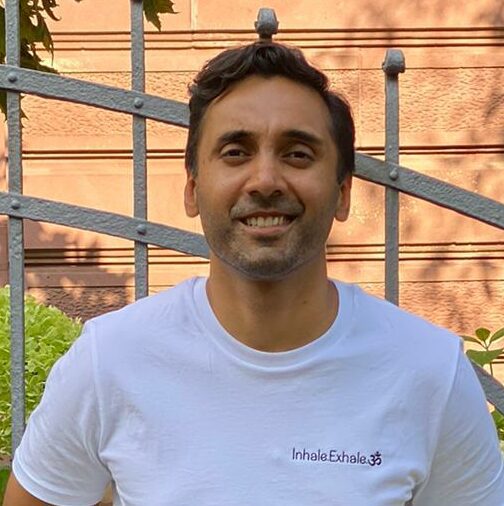
Manish Rana is a certified yoga teacher and founder of asanaverse.de. He writes about topics around yoga, ayurveda and meditation. Manish owes his deep connection to yoga to his Indian roots, through which he came into contact with this practice early on.
Learn more about our team here →DISCOVER MORE
More Extensions
Get our free ebook with 108 asanas now!
With great care and passion, we have selected and described 108 of the most important asanas for you in detail!
Perfect for your practice and cues ;)
Thank you for being here!
Thank you for being here and being part of this ever-evolving platform! We strive to keep growing and improving.
Your feedback is invaluable. Namasté 🙏
Comments feature coming soon. 💬
Guide
Browse our guide now
Accessible Yoga Mobility: Chair Yoga and Inclusive Asanas for All Bodies
Ahimsa – Gewaltlosigkeit als Fundament des Yoga und Lebens
Yoga Sutras zusammengefasst – Kapitel 2 (Sadhana Pada): Pfad der Praxis
Meditation bei Überforderung und Angststörung: Achtsam bleiben in turbulenten Zeiten
12 Wege, das Sitzen in der Meditation zu erleichtern — Stabiler sitzen, tiefer meditieren
Brahmacharya: Quelle des Lebens für mehr Lebenskraft und Vitalität