Supta Hasta Padangusthasana B
Reclining Hand-to-Big-Toe Pose II
Lie down with us in the Supta Hasta Padangusthasana B Uncovered. Like a quiet park in the midst of the urban bustle, this reclining leg-to-hand posture offers a gentle stretch and a feeling of serenity.
Category: Side Bends
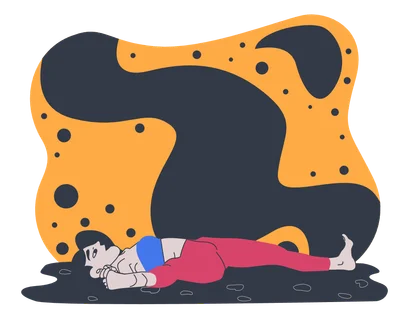
Side Bends are asanas in which you gently stretch muscles and joints. They promote suppleness and mobility. Breathing in Side Bends has a relaxing effect: you supply your muscles with oxygen and release tension.
VAYUS
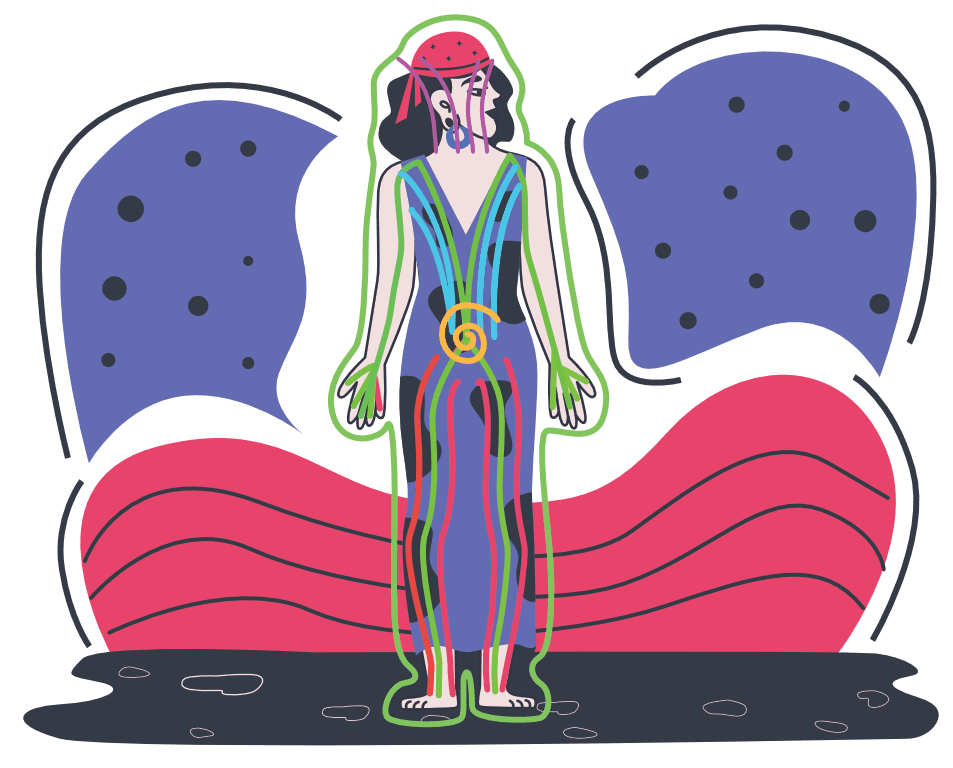
Each of the five Prana Vayus plays an essential role in our body and mind. They move and direct energy in specific directions, each with its own special area of influence and function. Reclining Hand-to-Big-Toe Pose II has its own unique effects on these vayus.
Prana Vayu – Expansion of Consciousness
▼
Located in the heart and in the breathing center, Prana Vayu is essential for the intake of life force. Supta Hasta Padangusthasana B gently opens the chest area, which widens the airways and enables a deeper breathing. This asana helps take in new energy and increase vitality – perfect when we need new inspiration or energy.
Udana Vayu – The Ascending Energy
▼
Responsible for expression and growth, Udana Vayu is located in the throat and head area. Although the focus in this asana is on the legs, the reclining position supports a relaxed throat region, which enables a clear flow of energy to Udana Vayu. This fosters a clear mind and improves the ability to communicate and express.
Vyana Vayu – Expansion and Opening
▼
This vayu, which flows through the entire body, supports integration and coordination. Supta Hasta Padangusthasana B requires a harmonious action between holding and letting go, which fosters the integrating function of Vyana Vayu. This asana is especially effective for establishing a feeling of unity in the body and directing attention to the wholeness of our being.
CHAKRAS
Muladhara Chakra (Root Chakra)
▼
The Muladhara Chakra, located at the base of the spine, stands for grounding, safety and stability. In Supta Hasta Padangusthasana B, the root chakra is activated through the strong connection of the hips and legs with the earth. This pose fosters a deep feeling of grounding and helps find stability and safety in life.
Swadhisthana Chakra (Sacral Chakra)
▼
The Swadhisthana Chakra, located in the area of the lower belly, is the center of creativity, sexuality and the ability to embrace change. In Supta Hasta Padangusthasana B, this chakra is activated through the stretching and opening of the hips. This asana fosters emotional release and supports the creative flow.
Manipura Chakra (Solar Plexus Chakra)
▼
The Manipura Chakra, located in the stomach area, represents willpower, self-confidence and inner strength. In Supta Hasta Padangusthasana B, the abdominal area is strengthened, which stimulates the Manipura Chakra and fosters self-confidence. This pose helps activate the inner strength and develop courage for new challenges.
KOSHAS
Annamaya Kosha (Physical Body)
▼
This layer refers to the physical body. Supta Hasta Padangusthasana B works intensely on the leg muscles, improves the flexibility of the hips and hamstrings and strengthens the abdominal muscles. This stretch supports physical health and fosters a good posture and mobility.
Pranamaya Kosha (Energy Body)
▼
This layer encompasses the life energy that circulates through breathing and energy channels. Supta Hasta Padangusthasana B supports circulation, especially in the legs and hips, and fosters an efficient breathing. This can improve the general feeling of energy in the body.
Manomaya Kosha (Mental Body)
▼
This layer contains the mind, emotions and thoughts. The concentration and relaxation required in Supta Hasta Padangusthasana B calm the mind and can reduce stress and fears. This practice fosters mental clarity and emotional balance.
Vijnanamaya Kosha (Intellectual Body)
▼
This body refers to intuition and higher levels of consciousness. Supta Hasta Padangusthasana B fosters awareness of one's own body and inner states, which contributes to the development of self-understanding and intuition.
Anandamaya Kosha (Spiritual Body)
▼
The deepest, spiritual layer, connected with inner peace and bliss. Supta Hasta Padangusthasana B can foster a feeling of connectedness with the inner self and enable moments of deep relaxation and contentment.

DOSHAS
Vata
▼
Supta Hasta Padangusthasana B can calm Vata, as it is performed in a reclining and thus grounding position. The controlled leg movement supports the Vata balance by offering structure and calm.
Pitta
▼
This asana can neutralize or slightly increase Pitta. The systematic and precise execution satisfies Pitta's need for order and perfection, while the stretch can help break down excess heat and tension.
Kapha
▼
This asana can help reduce Kapha, as it counteracts stagnation and fosters circulation, especially in the area of the hips and thighs, which are typical zones for Kapha accumulations. The activating effect of the leg movement can help reduce the heaviness and sluggishness of Kapha.

Key Information for Correct Execution
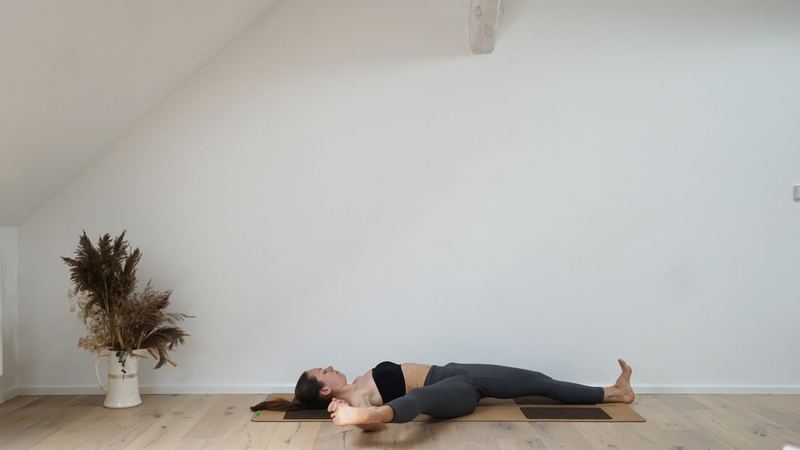
Meet Geraldine, a certified yoga teacher and psychology student who emphasizes mindfulness and alignment to inspire people toward a more peaceful life.
Common Mistakes
Shoulders lift off the floor, hips not centered, lower leg not straight and active.
Our Tip
This posture is excellent as a pose before the final relaxation. As an additional stretch of the thigh, you can fold in the lower knee and grip your foot and “kick” with this foot into your hand while holding the other foot.
Variations
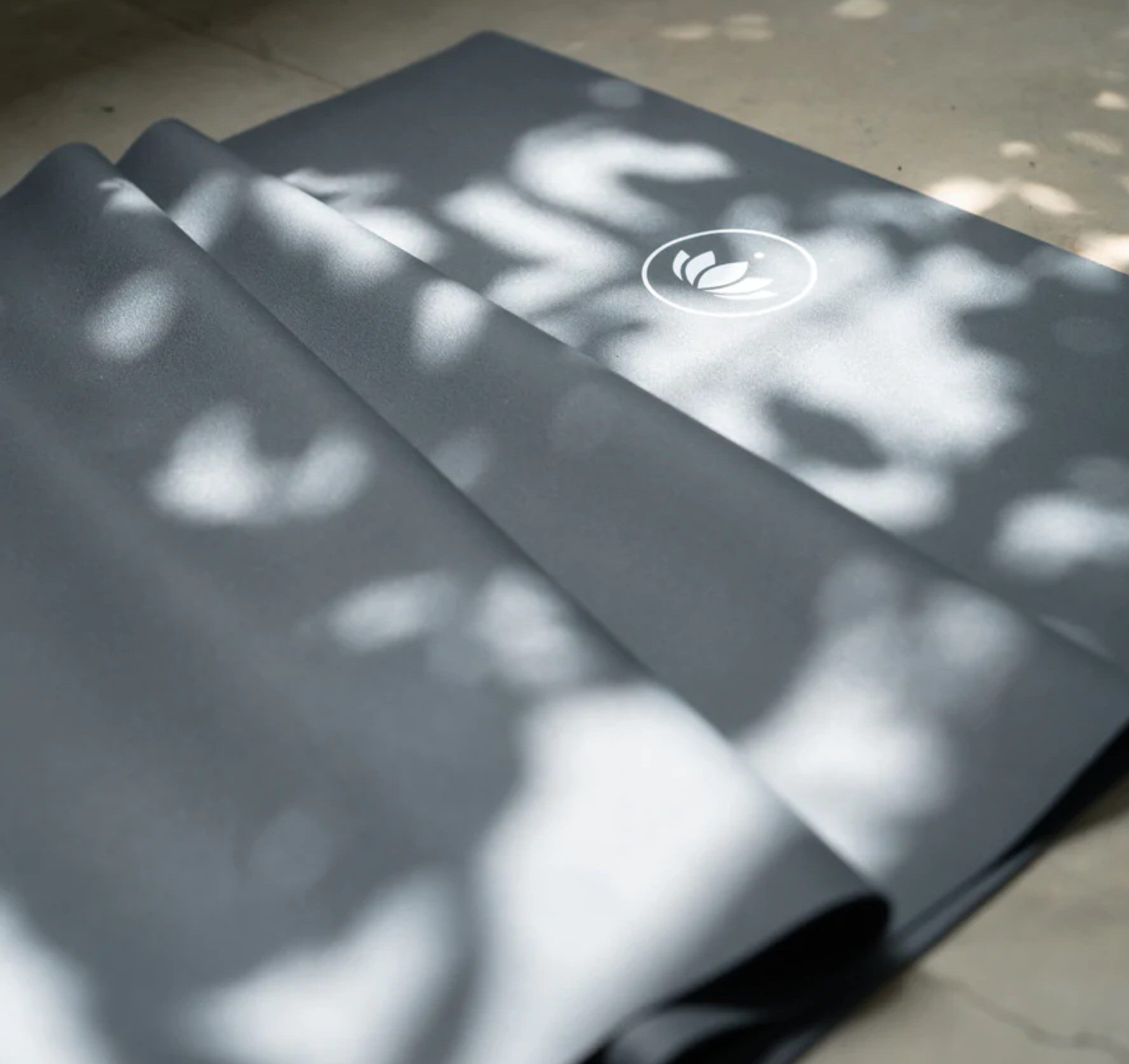
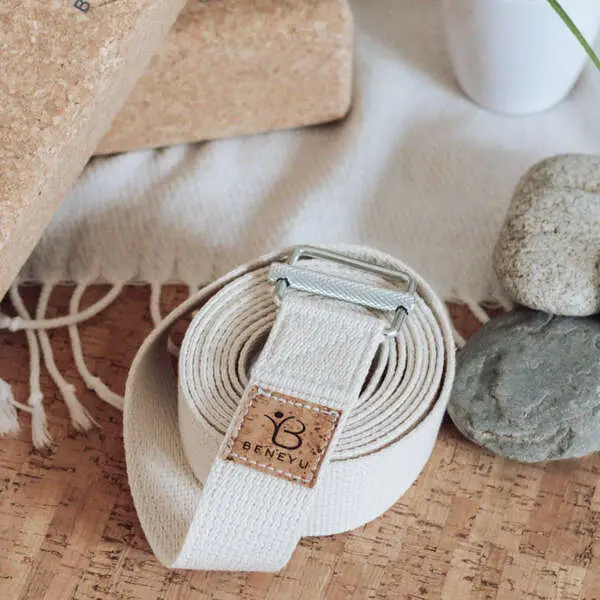
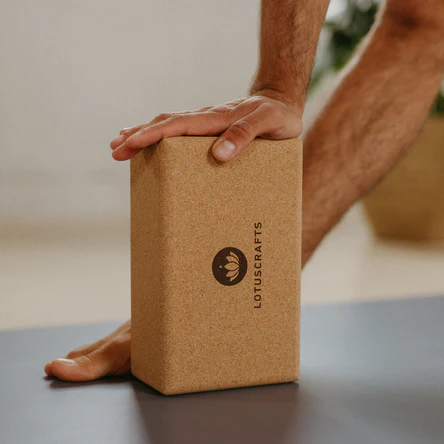
Slide a block or a pillow under your upper knee so that your shoulders stay relaxed on the floor. It is easier to grip the outer edge of the foot if you use a strap for help and loop it over the foot.
Physical Effect
Improved Leg Flexibility
This asana aims at an intense stretch of the leg muscles, especially the hamstrings, the adductors and partly also the calf musculature. Through the gentle extension of the lifted leg in a lateral movement, the flexibility of the hip joints is also improved.
Core Stabilization
Although the focus is on stretching the legs, the pose also requires a certain activation of the core to keep the pelvis stable. This strengthens the deep-lying abdominal muscles and the lower back, which leads to an improved posture and core stability. A strong core musculature is crucial for the prevention of back pain and the support of everyday movements.
Flexible Hips
Supta Hasta Padangusthasana B fosters the mobility of the hip joints, which is especially beneficial for people who sit for long periods or have little movement. The lateral movement of the leg in the pose helps stretch the hip flexors and the musculature around the pelvis, which can lead to an improved hip mobility and a reduction of hip stiffness.
Effects on Psyche and Emotions
Inner Calm
The reclining position in Supta Hasta Padangusthasana B fosters a feeling of relaxation and can help calm the mind. The focused breathing and the gentle stretch make it possible to escape stress and racing thoughts, which leads to a state of inner calm.
Emotional Balance
Through the stretching of the leg musculature and especially the hips, where many people store emotional tension, this asana can contribute to emotional relief. The releasing of physical tension can in parallel foster the releasing of emotional burdens.
Physical Awareness
Holding the leg in the air requires a certain measure of body awareness and fosters proprioceptive intelligence. This awareness can lead to a better understanding of one's own body and its signals.
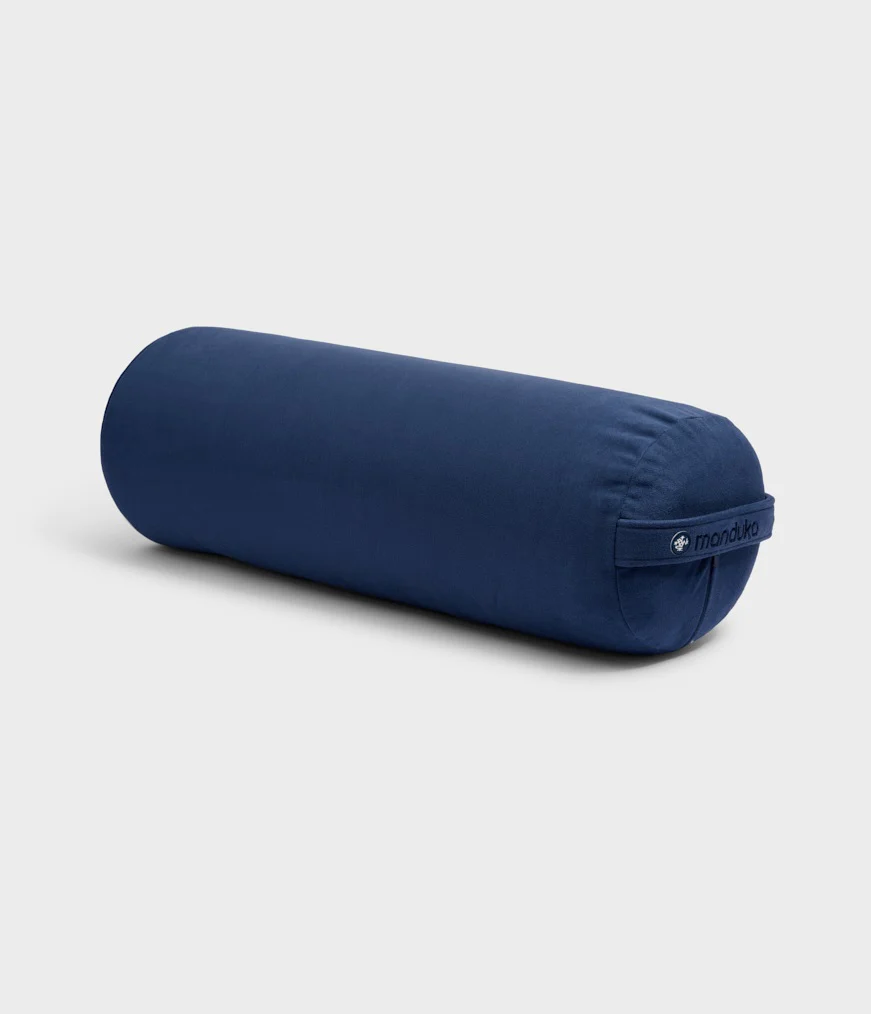
Props
Also interesting!
Author of this Asana

Manish Rana is a certified yoga teacher and founder of asanaverse.de. He writes about topics around yoga, ayurveda and meditation. Manish owes his deep connection to yoga to his Indian roots, through which he came into contact with this practice early on.
Learn more about our team here →DISCOVER MORE
More Side Bends
Get our free ebook with 108 asanas now!
With great care and passion, we have selected and described 108 of the most important asanas for you in detail!
Perfect for your practice and cues ;)
Thank you for being here!
Thank you for being here and being part of this ever-evolving platform! We strive to keep growing and improving.
Your feedback is invaluable. Namasté 🙏
Comments feature coming soon. 💬
Guide
Browse our guide now
Accessible Yoga Mobility: Chair Yoga and Inclusive Asanas for All Bodies
Ahimsa – Gewaltlosigkeit als Fundament des Yoga und Lebens
Yoga Sutras zusammengefasst – Kapitel 2 (Sadhana Pada): Pfad der Praxis
Meditation bei Überforderung und Angststörung: Achtsam bleiben in turbulenten Zeiten
12 Wege, das Sitzen in der Meditation zu erleichtern — Stabiler sitzen, tiefer meditieren
Brahmacharya: Quelle des Lebens für mehr Lebenskraft und Vitalität