
Dandasana
Staff Pose
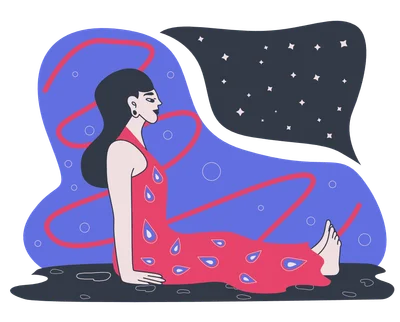
Sit with us in the powerful pillar of our Dandasana Uncovered. Like an old tree firmly rooted between the busy urban squares, this staff pose brings steadfastness and grounding into your urban life.
Category: Extensions
Extensions are asanas in which you gently stretch muscles and joints. They promote suppleness and mobility. Breathing in Extensions has a relaxing effect: you supply your muscles with oxygen and release tension.

VAYUS
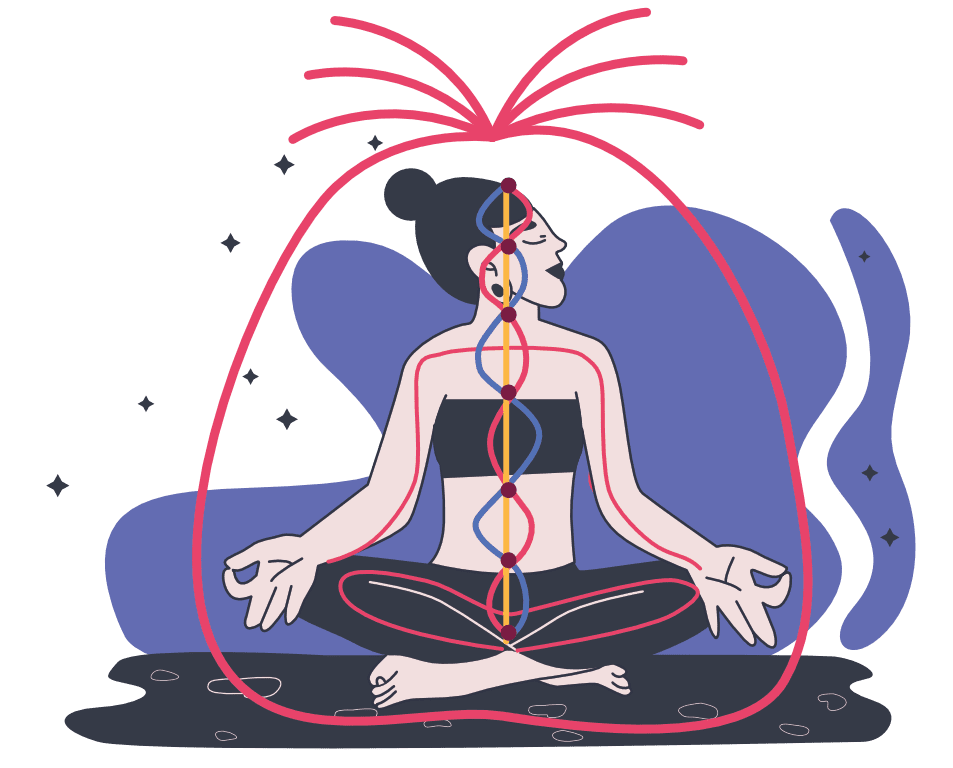
Each of the five Prana Vayus plays an essential role in our body and mind. They move and direct energy in specific directions, each with its own special area of influence and function. Staff Pose has its own unique effects on these vayus.
Udana Vayu – The Ascending Energy
▼
In Dandasana, Udana Vayu is activated, the ascending energy that works in the throat and head area. Through the upright posture of the spine and the conscious alignment of head and neck, this asana fosters the clarity of the mind and expression. The activation of Udana Vayu supports communication, self-confidence and mental alertness. If you want to strengthen your voice or foster mental clarity, Dandasana helps harmonize the ascending energy of Udana Vayu.
Prana Vayu – Expansion of Consciousness
▼
Dandasana stimulates Prana Vayu, the energy in the chest area responsible for the intake of prana (life energy) through breath and food. Through the conscious opening of the ribcage and the deepening of the breath in this pose, the intake of life energy is fostered. The posture improves the lung capacity and strengthens the heart, which increases vitality and joy for life.
Vyana Vayu – Expansion and Opening
▼
Dandasana fosters Vyana Vayu, the all-encompassing energy responsible for the circulation of prana to every cell in the body. Through the active extension of the legs, the alignment of the spine and the conscious posture of arms and hands, this asana supports the free flow of energy and blood throughout the entire body. The pose improves circulation and fosters a feeling of wholeness and integration. If you want to improve the flow of energy in your body, Dandasana helps harmonize Vyana Vayu.
CHAKRAS
Muladhara Chakra (Root Chakra)
▼
In Dandasana, the Muladhara Chakra is activated, as the posture fosters a firm connection to the earth. Through the conscious sitting on the sitting bones and the extension of the legs forward, a stable foundation arises. This pose strengthens the legs and the lower back, which supports the feeling of grounding and safety—core qualities of the root chakra. Dandasana helps develop a deep feeling of rootedness by creating the base for an upright posture and strengthening the trust in one's own stability.
Manipura Chakra (Solar Plexus Chakra)
▼
Dandasana stimulates the Manipura Chakra in the area of the solar plexus through the conscious straightening of the spine and the activation of the abdominal musculature. This posture requires and fosters inner strength, willpower and self-discipline—key qualities of the solar plexus chakra. Through the concentration on an upright and proud posture, the inner fire is kindled, which strengthens self-confidence and increases the personal power. Dandasana thus supports the development of determination and inner strength.
Vishuddha Chakra (Throat Chakra)
▼
Although Dandasana is a sitting pose, it influences the Vishuddha Chakra through the lengthening of the spine up to the crown and the conscious alignment of the head and neck. The open and upright posture fosters a free flow of energy through the throat area, which activates the throat chakra. This supports clear communication and authentic self-expression. Through the release of tension in the neck and the opening of the ribcage, Dandasana makes it possible to release blockages in the throat chakra and strengthen the ability to express oneself truthfully and confidently.
KOSHAS
Annamaya Kosha (Physical Body)
▼
Annamaya Kosha is the material body, our physical existence. Dandasana strengthens the musculature of the back and the legs, fosters an upright posture and stretches the leg musculature.
Pranamaya Kosha (Energy Body)
▼
Pranamaya Kosha describes the energy that flows through the body. Through the opening of the ribcage in Dandasana, the flow of prana is facilitated, especially in the heart region, to increase the energy level.
Manomaya Kosha (Mental Body)
▼
Manomaya Kosha encompasses the mind and the emotions. Dandasana requires and fosters mental concentration and helps clear the mind.
Vijnanamaya Kosha (Intellectual Body)
▼
Vijnanamaya Kosha represents inner wisdom and intuition. Dandasana fosters an awareness of the body and the alignment, which on a deeper level can strengthen self-perception and self-understanding.
Anandamaya Kosha (Spiritual Body)
▼
Anandamaya Kosha is the essence of inner happiness and joy. Through the practice of Dandasana and the connection with the inner self, a feeling of contentment and happiness can be fostered.

DOSHAS
Vata
▼
The grounding quality of Dandasana, with both halves of the buttocks firmly on the floor and an upright spine, can offer stability and grounding to the flighty Vata dosha. It helps balance the constantly changing thoughts and the restless nature of Vata.
Pitta
▼
While Dandasana requires an active engagement, it also offers a way for inner reflection and for cooling the fiery Pitta temperament. The conscious alignment and breathing in this pose can give Pitta individuals a break from their typically goal-oriented thinking and lead them to a state of serenity.
Kapha
▼
Dandasana, although a seemingly static posture, requires an active engagement of muscles and concentration. This active engagement can enliven the Kapha dosha, which is by nature sluggish and stable. The taut alignment and the focused state of mind can help combat lethargy and the feeling of heaviness, typical for a Kapha excess.

Key Information for Correct Execution
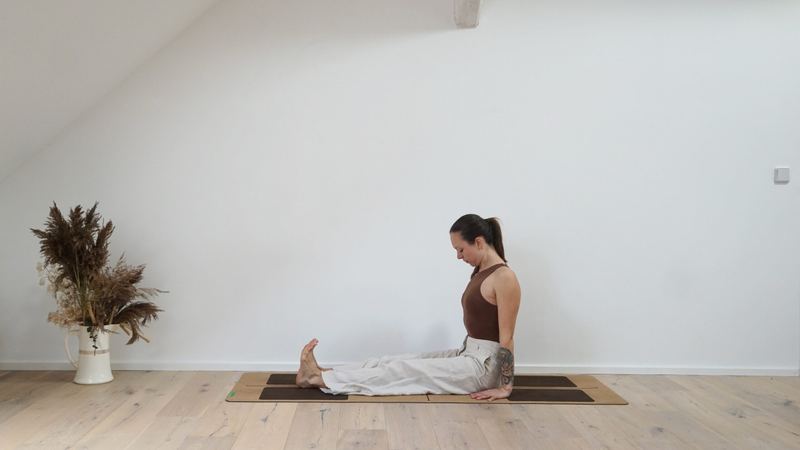
Meet Geraldine, a certified yoga teacher and psychology student who emphasizes mindfulness and alignment to inspire people toward a more peaceful life.
Common Mistakes
Common mistakes are a non-upright body, a rounded back and inactive legs and feet.
Our Tip
This posture may seem boring at first, but it has a high centering effect on the awareness and the length of your spine. Try to sit still and present in your own presence for a minute. It is both physically and mentally challenging.
Variations
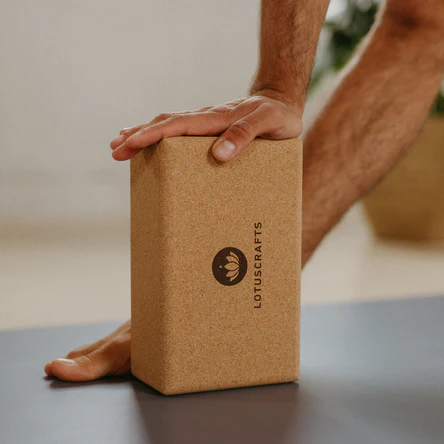
People with back complaints or a stiff back of the legs should sit on a folded blanket or a block to support the upright alignment of the spine.
Physical Effect
Core Strength
Dandasana intensely strengthens the core musculature, especially the rectus abdominis and the oblique abdominal muscles. Through the active engagement of these muscles to maintain an upright posture, core strength is fostered. This strengthened core supports a better posture in everyday life, which is especially important for people who spend a lot of time sitting and are prone to a slumped posture.
Leg Activation
Although it looks like simple sitting, Dandasana requires the active engagement and lengthening of the leg musculature. The quadriceps are activated to keep the legs extended. This not only strengthens the thigh musculature but also fosters circulation in the lower extremities, which is especially useful for those who struggle with poor circulation in the legs.
Spinal Alignment
The conscious effort to keep the spine upright and extended in Dandasana trains the back musculature and fosters a correct alignment. This is invaluable for the prevention and correction of posture damage. Through the regular practice of this posture, tension in the upper and middle back area caused by poor posture and prolonged sitting can be eased.
Effects on Psyche and Emotions
Self-Perception
Dandasana challenges the practitioner to take an upright and aligned posture. This fosters the awareness of one's own body and one's own limits. Mental strength and self-confidence are increased in the process.
Focus & Clarity
Through holding this pose, even if it looks simpler, many muscles have to be activated. This requires and fosters concentration. The conscious sitting in Dandasana helps clear the mind and shake off distractions.
Resilience
Although it appears like simple sitting, Dandasana requires an active effort and endurance. It teaches perseverance and resilience despite apparent simplicity and stillness.
Props


Also interesting!
Author of this Asana

Manish Rana is a certified yoga teacher and founder of asanaverse.de. He writes about topics around yoga, ayurveda and meditation. Manish owes his deep connection to yoga to his Indian roots, through which he came into contact with this practice early on.
Learn more about our team here →DISCOVER MORE
More Extensions


Get our free ebook with 108 asanas now!
With great care and passion, we have selected and described 108 of the most important asanas for you in detail!
Perfect for your practice and cues ;)
Thank you for being here!
Thank you for being here and being part of this ever-evolving platform! We strive to keep growing and improving.
Your feedback is invaluable. Namasté 🙏
Comments feature coming soon. 💬
Guide
Browse our guide now
Accessible Yoga Mobility: Chair Yoga and Inclusive Asanas for All Bodies
Ahimsa – Gewaltlosigkeit als Fundament des Yoga und Lebens
Yoga Sutras zusammengefasst – Kapitel 2 (Sadhana Pada): Pfad der Praxis
Meditation bei Überforderung und Angststörung: Achtsam bleiben in turbulenten Zeiten
12 Wege, das Sitzen in der Meditation zu erleichtern — Stabiler sitzen, tiefer meditieren
Brahmacharya: Quelle des Lebens für mehr Lebenskraft und Vitalität