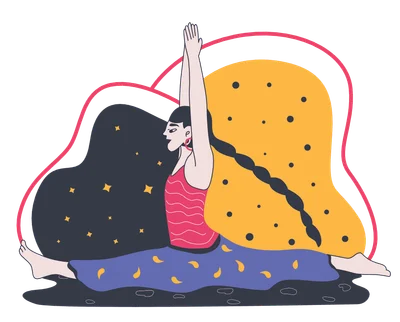
Hanumanasana
Splits
Leap with us into the brave expanse of our Hanumanasana Uncovered. Like Hanuman heroically crossing the urban chaos, this pose of the monkey god brings courage and determination into your urban life.
Category: Forward Bends
Forward Bends are asanas in which you gently stretch muscles and joints. They promote suppleness and mobility. Breathing in Forward Bends has a relaxing effect: you supply your muscles with oxygen and release tension.
VAYUS
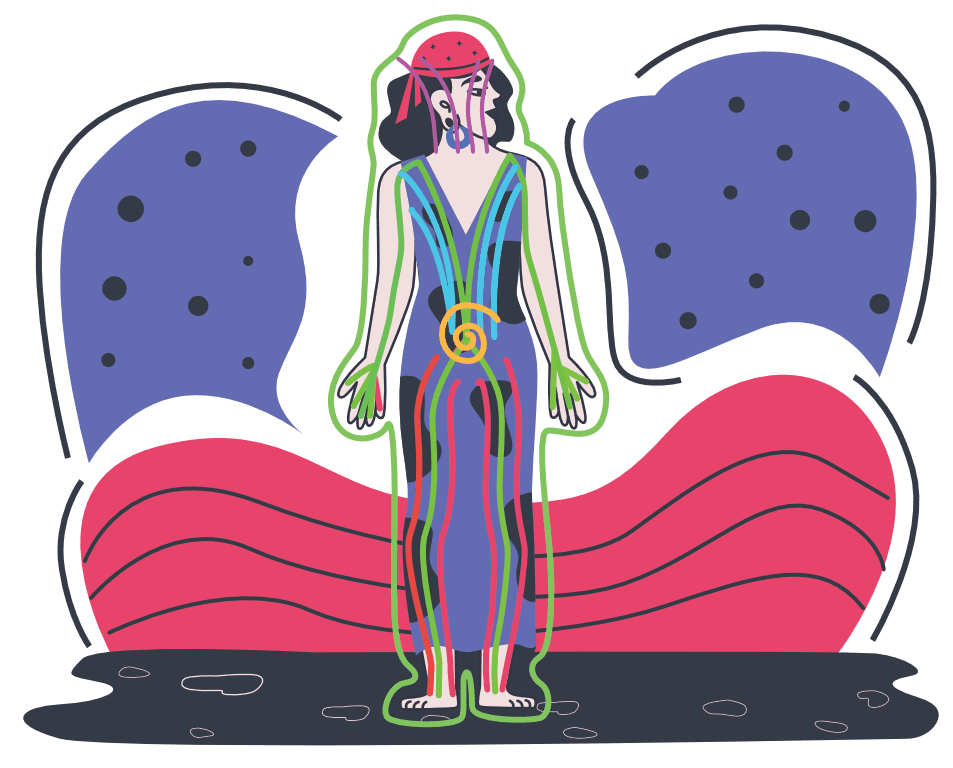
Each of the five Prana Vayus plays an essential role in our body and mind. They move and direct energy in specific directions, each with its own special area of influence and function. Splits has its own unique effects on these vayus.
Apana Vayu – The Grounding Force
▼
Hanumanasana requires a strong rooting through the legs. This aspect corresponds to the Apana Vayu, the energy that flows downward and out of the body. In this position, the hips are deeply opened and stretched, which helps support the functions of the body attributed to Apana Vayu, such as elimination and menstruation.
Samana Vayu – The Balancing Force
▼
Samana Vayu is the energy concentrated on the center of the body and helps maintain the inner balance. When performing Hanumanasana, a high concentration on the body core is required. The necessity to hold the balance while the legs are drawn in opposite directions can strengthen the Samana Vayu.
Vyana Vayu – Expansion and Opening
▼
This vayu stands for the outward-directed, expanding energy. Hanumanasana, in which the legs are drawn in opposite directions, fosters the Vyana Vayu.
CHAKRAS
Muladhara Chakra (Root Chakra)
▼
Hanumanasana, the splits, works strongly on the Muladhara Chakra, located at the base of the spine. This asana requires a deep connection to the earth, as both feet are pressed firmly to the floor. This strengthens the feeling of grounding, stability and safety connected with the root chakra. In this posture, one can feel deeply rooted, which supports the trust in one's own strength and safety.
Swadhisthana Chakra (Sacral Chakra)
▼
Hanumanasana opens the hips and stretches the pelvic area, which activates the Swadhisthana Chakra. This chakra stands for creativity, sexuality and emotional fluidity. Through the stretching and opening of the pelvis, Hanumanasana can release blockages in this chakra and foster the emotional and creative flow. This asana supports the ability to adapt to the flow of life and express emotions freely.
Manipura Chakra (Solar Plexus Chakra)
▼
Hanumanasana also strengthens the Manipura Chakra, located in the solar plexus area. This asana requires and fosters willpower, determination and inner strength. By stabilizing the body center and keeping the entire body in balance, the inner fire of the Manipura Chakra is kindled, which supports self-confidence and assertiveness. The pose fosters the feeling of standing in one's power and pursuing one's goals with courage.
KOSHAS
Annamaya Kosha (Physical Body)
▼
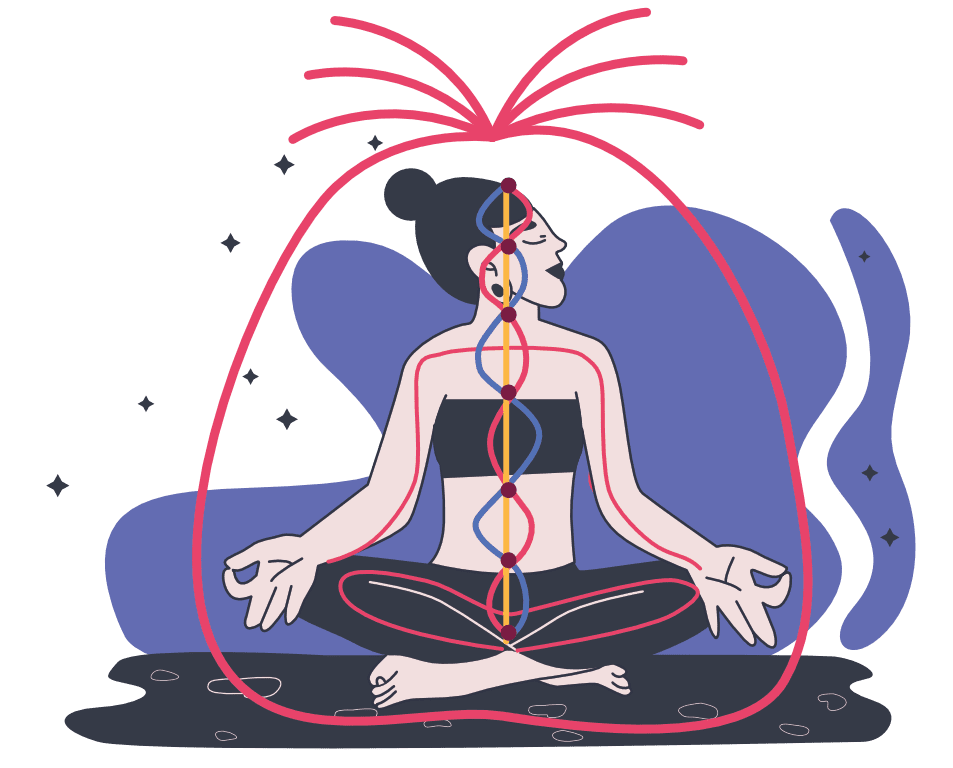
Hanumanasana is like an open book for the physical body. It fosters flexibility in the hip flexors, thighs and the groin area, strengthens the leg musculature and improves the general mobility.
Pranamaya Kosha (Energy Body)
▼
The powerful splits have an impressive influence on our energy body. It stimulates the flow of energy and especially strengthens Apana, Samana and Vyana Vayu. The improved flow of energy could benefit people with low energy or a tendency toward energy stagnation.
Manomaya Kosha (Mental Body)
▼
Hanumanasana is not only a physical exercise but also a mental one. It demands concentration, endurance and devotion – a real exercise for our Manomaya Kosha. Someone who struggles with stress or mental restlessness could find in this asana a way to find calm and focus.
Vijnanamaya Kosha (Intellectual Body)
▼
The movement into Hanumanasana requires not only physical and mental but also intuitive energy. By following our intuition and listening to our body, we learn to respect our limits and develop ourselves step by step. This can be especially helpful for people who have difficulty listening to their inner voice or accepting their own limits.
Anandamaya Kosha (Spiritual Body)
▼
Hanumanasana, although challenging, can also lead us to the experience of bliss when we fully relax into the pose and accept ourselves in our present form. Someone who struggles with self-criticism or negative feelings toward themselves could learn through practicing this asana to develop more self-love and acceptance.

DOSHAS
Vata
▼
Hanumanasana has a calming effect on the Vata dosha. This asana fosters grounding and stability by placing the focus on the anchoring of the legs and the alignment of the body. This grounding helps calm the often restless and scattered nature of Vata and create a feeling of inner calm and steadiness. For someone with high Vata, Hanumanasana can be a valuable practice to stabilize the attention and calm the mind.
Pitta
▼
Hanumanasana can also help reduce the Pitta dosha, as the pose requires patience and devotion. Instead of pursuing the pose aggressively or ambitiously, Hanumanasana invites you to move gently into the stretch and respect your own limits. This helps soothe the fiery nature of Pitta and reduce excess heat or tension. For Pitta types, this asana can be a way to treat yourself gently and foster a cool, balanced energy.
Kapha
▼
Hanumanasana has the potential to strengthen the Kapha dosha, as it has a grounding and calming effect. This asana fosters stability and can strengthen the feeling of safety and being rooted, which supports Kapha. At the same time, it can help increase flexibility and overcome stagnation when performed consciously and with dynamic energy. For someone with high Kapha, Hanumanasana could be a valuable practice to mobilize the inner energy and foster the feeling of lightness and mobility.

Key Information for Correct Execution
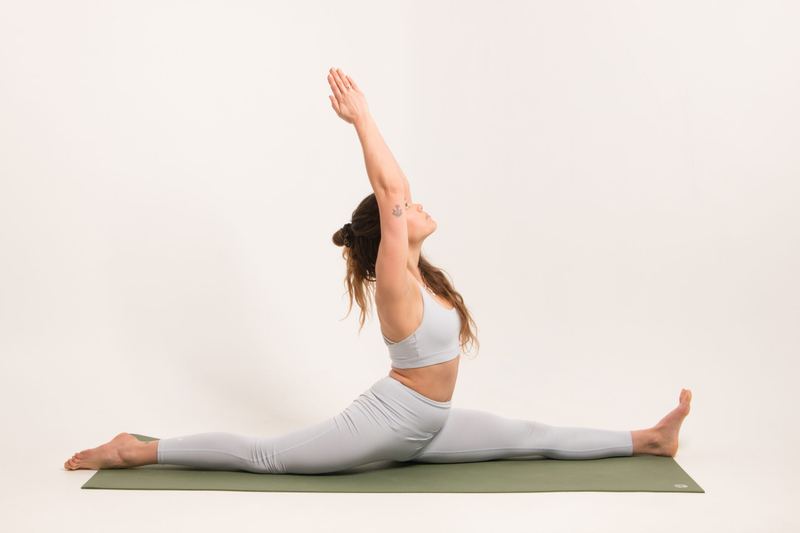
Meet Geraldine, a certified yoga teacher and psychology student who emphasizes mindfulness and alignment to inspire people toward a more peaceful life.
Common Mistakes
• Overextension of the hip • Hip bones are not aligned parallel to the front
Our Tip
Never force yourself into the splits and respect the limits of your body. Stretching should be pleasant, but never painful. Observe your limits and continuously work on expanding them. The splits are a long-term project and require patience and regular practice over a longer period.
Variations
Ardha Hanumanasana (half splits) can be practiced as preparation for the full splits. Here one knee is on the floor while the other leg is extended.
Physical Effect
Supple Hips
Hanumanasana is known for its intense stretches in the hip area. It works on the iliopsoas, the strongest of all hip flexors. Over time and with regular practice, this asana can help open the hips and increase mobility, which is especially important for all those among us who sit in the office all day.
Hamstring Heroes
The asana strongly stretches the hamstrings and can help loosen these muscles and improve their elasticity. This can be especially helpful for runners and other athletes who often struggle with tense or injured thigh muscles.
Strong Core
Even if it does not look that way at first glance, Hanumanasana requires a strong core musculature. To hold the position and maintain the balance, you have to activate your abdominal and back musculature. Over time, this asana can help strengthen the core and foster a better posture.
Effects on Psyche and Emotions
Courage and Devotion
The practice of Hanumanasana requires courage. It challenges us to overcome our fears and fully surrender, just as Hanuman did. With regular practice, we can learn to face our fears and act more courageously in our life.
Patience and Endurance
Hanumanasana is not an asana that one reaches overnight. It requires patience, endurance and consistent practice. The ability to practice patience and persevere can have a positive effect on our entire life by helping us master challenges with calm and persistence.
Acceptance and Letting Go
Hanumanasana reminds us to accept our body as it is and let go of all expectations. It teaches us to respect our limits and enjoy the process instead of focusing on the result. This attitude can help us develop a healthy self-image and love ourselves as we are.
Props
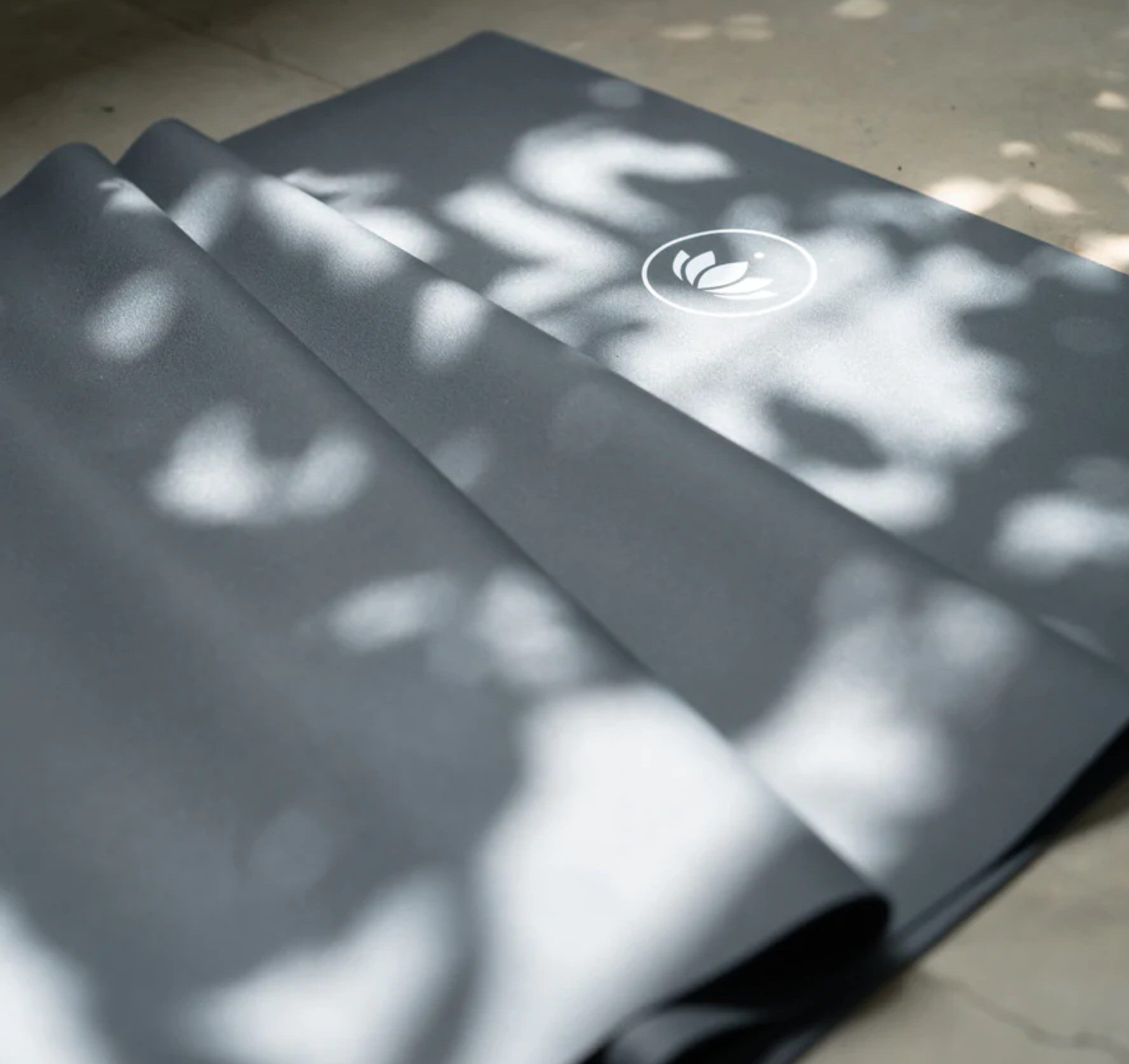

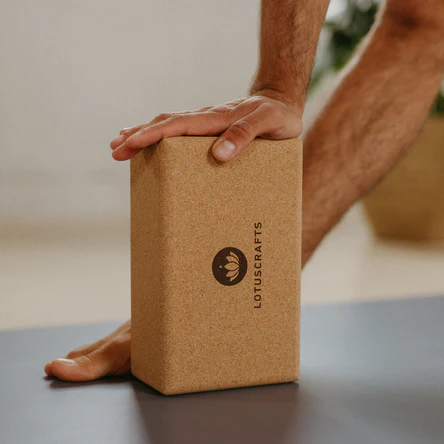
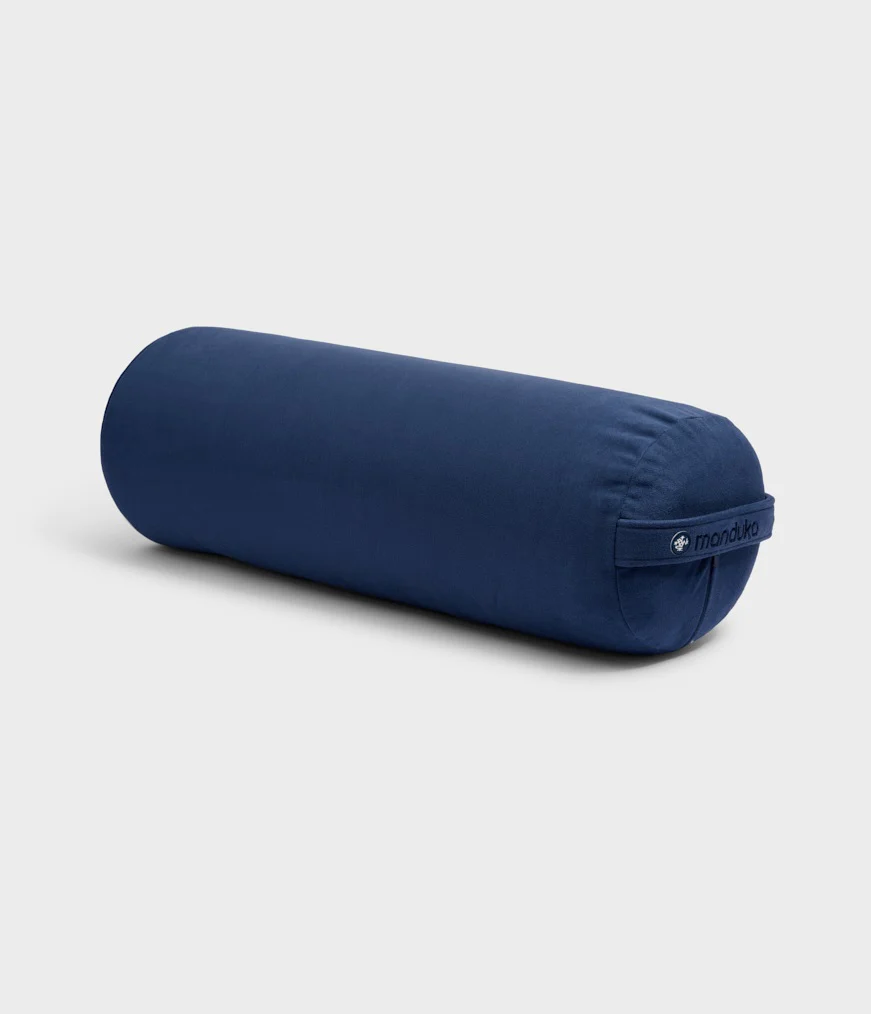
Also interesting!
Author of this Asana

Manish Rana is a certified yoga teacher and founder of asanaverse.de. He writes about topics around yoga, ayurveda and meditation. Manish owes his deep connection to yoga to his Indian roots, through which he came into contact with this practice early on.
Learn more about our team here →DISCOVER MORE
More Forward Bends
Get our free ebook with 108 asanas now!
With great care and passion, we have selected and described 108 of the most important asanas for you in detail!
Perfect for your practice and cues ;)
Thank you for being here!
Thank you for being here and being part of this ever-evolving platform! We strive to keep growing and improving.
Your feedback is invaluable. Namasté 🙏
Comments feature coming soon. 💬
Guide
Browse our guide now
Accessible Yoga Mobility: Chair Yoga and Inclusive Asanas for All Bodies
Ahimsa – Gewaltlosigkeit als Fundament des Yoga und Lebens
Yoga Sutras zusammengefasst – Kapitel 2 (Sadhana Pada): Pfad der Praxis
Meditation bei Überforderung und Angststörung: Achtsam bleiben in turbulenten Zeiten
12 Wege, das Sitzen in der Meditation zu erleichtern — Stabiler sitzen, tiefer meditieren
Brahmacharya: Quelle des Lebens für mehr Lebenskraft und Vitalität