Urdhva Prasarita Eka Padasana
Standing Split
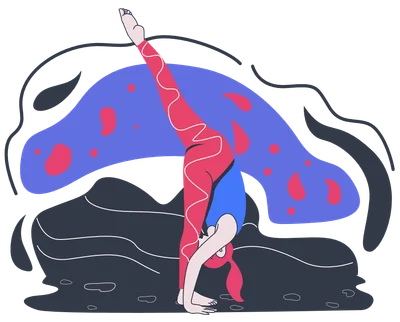
Rise with us into the light-flooded heights of our Urdhva Prasarita Eka Padasana Uncovered. Like a lone skyscraper boldly stretching against the urban sky, this upward-extended one-legged forward bend lifts your awareness and your flexibility in your urban life.
Category: Forward Bends
Forward Bends are asanas in which you gently stretch muscles and joints. They promote suppleness and mobility. Breathing in Forward Bends has a relaxing effect: you supply your muscles with oxygen and release tension.
VAYUS
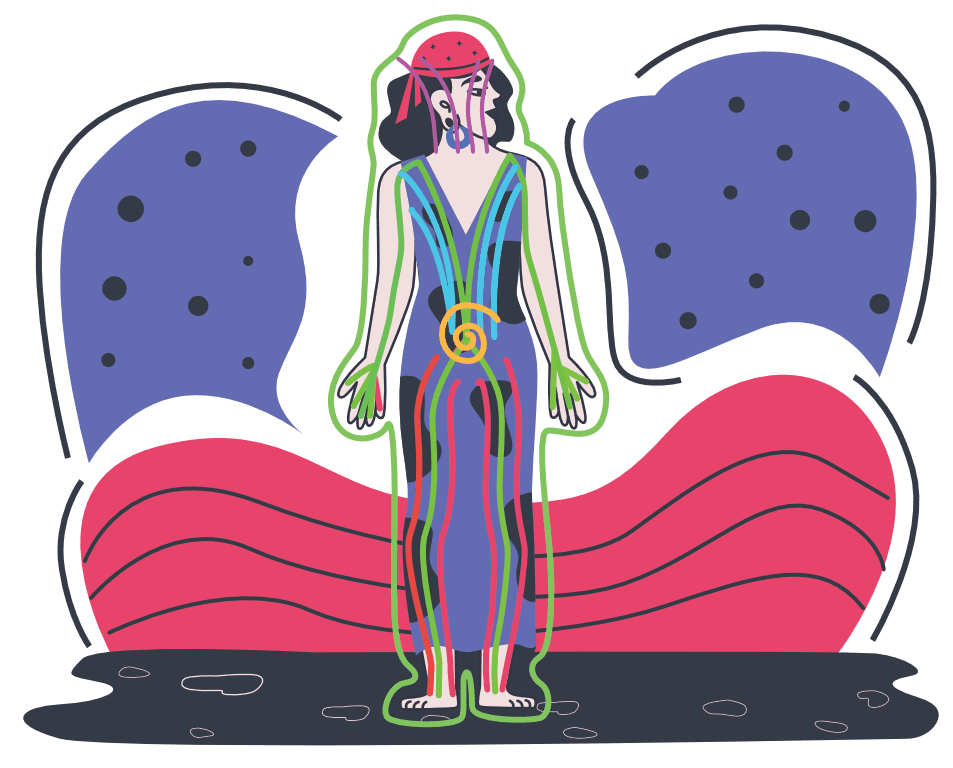
Each of the five Prana Vayus plays an essential role in our body and mind. They move and direct energy in specific directions, each with its own special area of influence and function. Standing Split has its own unique effects on these vayus.
Apana Vayu – The Grounding Force
▼
In Urdhva Prasarita Eka Padasana, Apana Vayu, the downward-directed energy, is activated. This vayu is responsible for the elimination processes and the stability in the lower body. Through the forward bend of the upper body and the lifting of one leg upward, a deep stretch arises in the pelvic and lower back area. This posture fosters the stimulation of Apana Vayu by increasing the circulation in the pelvis and supporting the function of the digestive organs. The asana helps direct excess energy downward and thus fosters grounding and detoxification.
Samana Vayu – The Balancing Force
▼
Samana Vayu sits in the area of the navel and regulates the balance between inflowing and outflowing energy, especially in relation to digestion and metabolism. In Urdhva Prasarita Eka Padasana, the abdominal cavity is slightly compressed through the forward bend, which supports the activation of Samana Vayu. The posture also requires a strong centering and balance, whereby the inner center is strengthened.
Vyana Vayu – Expansion and Opening
▼
Vyana Vayu permeates the entire body and is responsible for the circulation of energy, blood and nutrients to all cells. In Urdhva Prasarita Eka Padasana, Vyana Vayu is activated through the expansion of the limbs and the extension of the raised leg. The posture fosters the peripheral circulation and improves the flexibility as well as the coordination of the movements.
CHAKRAS
Muladhara Chakra (Root Chakra)
▼
In Urdhva Prasarita Eka Padasana, the Muladhara Chakra is activated, as this pose requires a strong connection to the earth. Standing on one leg, the posture fosters grounding, stability and safety—core qualities of the root chakra, located at the base of the spine. The standing leg firmly anchored in the floor symbolizes our connection to the earth and creates a stable foundation. Through the conscious alignment and balance in this pose, the feeling of being rooted and inner safety is strengthened.
Swadhisthana Chakra (Sacral Chakra)
▼
The Swadhisthana Chakra, located in the lower abdominal area, is addressed in this asana through the intense stretch of the hip and pelvic region. The lifting of the leg and the opening of the hip foster the flow of energy in the sacral chakra, which stands for creativity, emotions and joy for life. The posture makes it possible to release emotional blockages and unleash the creative energy by fostering flexibility and mobility in the pelvic region.
Manipura Chakra (Solar Plexus Chakra)
▼
In Urdhva Prasarita Eka Padasana, the Manipura Chakra in the area of the solar plexus is intensely activated. The posture requires a strong core musculature and balance, which strengthens the inner fire, the willpower and the self-confidence—key qualities of the Manipura Chakra. Through the conscious control of the abdominal muscles and the stabilization of the torso, this chakra is stimulated, which can lead to increased self-confidence and determination.
KOSHAS
Annamaya Kosha (Physical Body)
▼
Annamaya Kosha represents our physical body. Urdhva Prasarita Eka Padasana strengthens above all the standing leg musculature, the hip flexors of the raised leg and the balance. It also improves the flexibility of the back thighs.
Pranamaya Kosha (Energy Body)
▼
Pranamaya Kosha encompasses our life energy. Through balancing on one leg in Urdhva Prasarita Eka Padasana, the prana is stimulated, which leads to a feeling of liveliness and refreshment.
Manomaya Kosha (Mental Body)
▼
Manomaya Kosha refers to our mental state. This asana requires full concentration and thus fosters mental clarity and focus.
Vijnanamaya Kosha (Intellectual Body)
▼
Vijnanamaya Kosha represents wisdom and deeper insights. Through the conscious alignment and holding of this balancing pose, one can develop a better body awareness and recognize subtle body sensations.
Anandamaya Kosha (Spiritual Body)
▼
Anandamaya Kosha is our innermost core of joy. Despite the physical challenge of Urdhva Prasarita Eka Padasana, mastering or even simply practicing the pose can evoke deep joy and contentment.
DOSHAS
Vata
▼
Urdhva Prasarita Eka Padasana reduces the Vata dosha by fostering stability and grounding. The posture requires balance, concentration and a firm rooting of the standing leg, which helps calm the fleeting and restless nature of Vata. Through the deep stretch and the conscious breathing, a feeling of inner calm and centering is created. This asana directs the energy downward and helps reduce nervousness and fears, which is especially beneficial for Vata types who often suffer from restlessness.
Pitta
▼
This asana has a cooling effect on the Pitta dosha by reducing excess heat in the body and fostering relaxation. The forward bend and the lifting of the leg make it possible to break down tension and shift the focus from performance to mindfulness. Through the concentration on balance and flexibility, without competitive thoughts, Urdhva Prasarita Eka Padasana helps soothe the fiery energy of Pitta. Pitta types benefit from it by learning to practice patience and surrender to the process instead of being fixated on the end result.
Kapha
▼
Urdhva Prasarita Eka Padasana increases the Kapha dosha by strengthening the qualities of grounding, stability and inner strength. The posture activates the musculature of the standing leg and fosters endurance and physical stability. At the same time, it helps overcome sluggishness by stimulating circulation and enlivening the mind. For Kapha types, this asana can help mobilize energy and reduce the feeling of heaviness while supporting their natural stability.

Key Information for Correct Execution
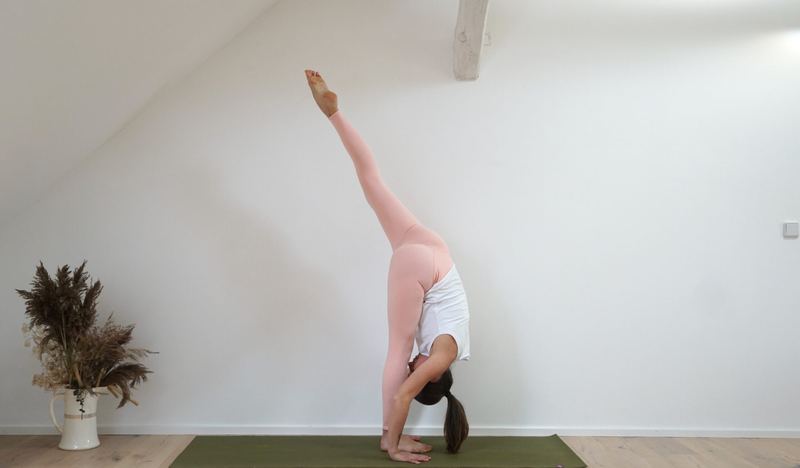
Meet Geraldine, a certified yoga teacher and psychology student who emphasizes mindfulness and alignment to inspire people toward a more peaceful life.
Common Mistakes
• Passive legs • Uncontrolled opening of the hip
Our Tip
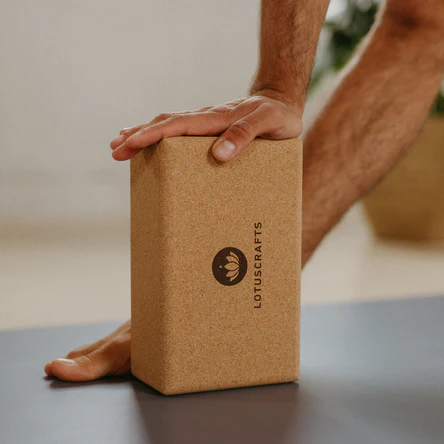
It is helpful to practice the parallel alignment of the hips in the standing split with two blocks under the hands to develop a feel for the inner and outer rotation of the upper leg. Also make sure to keep the standing leg stable and extend yourself long during the posture.
Variations
• If you tend toward overextension in the joints or have shortened backs of the legs, you can slightly bend the standing leg. • With difficulty holding the balance and finding the correct alignment, you can use two blocks under the hands. • For a variation with hip opening, you can hold on to the ankle, draw your upper body toward the standing leg and draw your upper leg far up.
Physical Effect
Strengthening the Core Musculature
In Urdhva Prasarita Eka Padasana, also referred to as the one-legged extended hip bend, the entire core area is activated. Lifting one leg while the other stays on the floor requires a considerable core stability, especially in the oblique and straight abdominal muscles. This strengthening of the core not only contributes to the support of the spine but can also prevent back pain that arises through weak abdominal muscles.
Flexibility of the Back Thighs
The upward-extended leg in this pose fosters the stretch of the back thigh musculature (hamstrings). Many people have shortened hamstrings due to prolonged sitting or insufficient stretching after physical activity. Regular practice of Urdhva Prasarita Eka Padasana can help increase the flexibility of these muscles and reduce the risk of injuries associated with a limited range of motion.
Improvement of Balance
Holding the body in this asymmetric pose challenges the ability to balance. The body learns to adapt by activating and fine-tuning smaller muscles to increase stability. This trains the proprioceptive abilities – our inner awareness of where our body is in space. This improved balance is especially valuable for preventing falls in everyday life, particularly in older people or in slippery and uneven environments.
Effects on Psyche and Emotions
Balance & Clarity
Urdhva Prasarita Eka Padasana, also known as the upward-extended one-legged pose, fosters not only physical but also mental balance. Through the challenge of balancing on one leg, the mind learns to push distractions aside and concentrate on the here and now.
Trust & Acceptance
Lifting one leg in the air during the balance can evoke feelings of vulnerability. However, the pose teaches to trust this feeling and accept one's own limits. Over time and with regular practice, self-confidence grows.
Letting Go & Realignment
This asana requires a letting go of old postures and movement patterns to make room for the new. It can symbolically stand for letting go of old thoughts and emotions that no longer serve us.
Props
Also interesting!
Author of this Asana
Manish Rana is a certified yoga teacher and founder of asanaverse.de. He writes about topics around yoga, ayurveda and meditation. Manish owes his deep connection to yoga to his Indian roots, through which he came into contact with this practice early on.
Learn more about our team here →DISCOVER MORE
More Forward Bends
Get our free ebook with 108 asanas now!
With great care and passion, we have selected and described 108 of the most important asanas for you in detail!
Perfect for your practice and cues ;)
Thank you for being here!
Thank you for being here and being part of this ever-evolving platform! We strive to keep growing and improving.
Your feedback is invaluable. Namasté 🙏
Comments feature coming soon. 💬
Guide
Browse our guide now
Accessible Yoga Mobility: Chair Yoga and Inclusive Asanas for All Bodies
Ahimsa – Gewaltlosigkeit als Fundament des Yoga und Lebens
Yoga Sutras zusammengefasst – Kapitel 2 (Sadhana Pada): Pfad der Praxis
Meditation bei Überforderung und Angststörung: Achtsam bleiben in turbulenten Zeiten
12 Wege, das Sitzen in der Meditation zu erleichtern — Stabiler sitzen, tiefer meditieren
Brahmacharya: Quelle des Lebens für mehr Lebenskraft und Vitalität