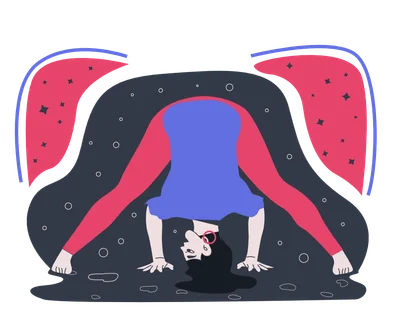
Prasarita Padottanasana
Wide-Legged Standing Forward Bend
Come with us into the swirling depths of our Prasarita Padottanasana Uncovered. Like a wind playfully whirling through the urban streets, this wide-legged forward bend brings vitality and mobility into your urban life.
Category: Forward Bends
Forward Bends are asanas in which you gently stretch muscles and joints. They promote suppleness and mobility. Breathing in Forward Bends has a relaxing effect: you supply your muscles with oxygen and release tension.
VAYUS
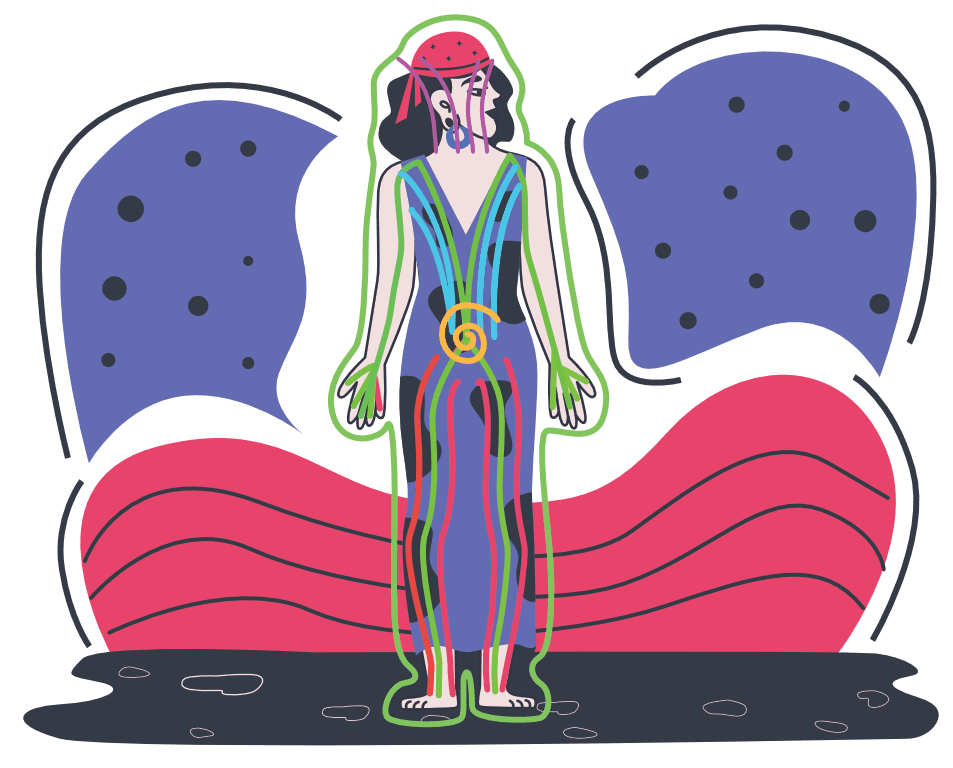
Each of the five Prana Vayus plays an essential role in our body and mind. They move and direct energy in specific directions, each with its own special area of influence and function. Wide-Legged Standing Forward Bend has its own unique effects on these vayus.
Apana Vayu – The Grounding Force
▼
Prasarita Padottanasana, or the wide-legged forward bend, works especially on Apana Vayu, the downward-directed energy in the lower part of the body. This asana fosters the elimination and detoxification associated with Apana Vayu. Through the tilting of the head downward, a grounding effect arises that stabilizes the mind. People with emotional restlessness could benefit from this asana.
Samana Vayu – The Balancing Force
▼
Prasarita Padottanasana stimulates Samana Vayu, the balancing and centering energy in the navel region. This asana fosters digestion and balance in body and mind. Samana Vayu helps distribute energy effectively to all parts of the body. People who feel scattered or unbalanced could find this asana helpful.
Vyana Vayu – Expansion and Opening
▼
The wide-legged forward bend in Prasarita Padottanasana influences Vyana Vayu, the expanding and integrating energy throughout the whole body. This asana supports circulation and helps connect body and mind. People who feel separated or isolated could benefit from this asana, as it helps foster the feeling of connectedness.
CHAKRAS
Muladhara Chakra (Root Chakra)
▼
Prasarita Padottanasana activates the Muladhara Chakra, located at the base of the spine and responsible for our connection to the earth and our feeling of safety. In this pose, the feet are placed wide apart and firmly connected with the floor, which fosters a strong feeling of grounding and stability.
Swadhisthana Chakra (Sacral Chakra)
▼
The sacral chakra, located in the lower abdominal area, is addressed through the wide leg position and the gentle stretch of the hips in Prasarita Padottanasana. This asana fosters the flow of energy in the pelvic area and can help release blockages in the sacral chakra, which are often connected with creativity, emotions and the enjoyment of life.
Anahata Chakra (Heart Chakra)
▼
Prasarita Padottanasana also works on the Anahata Chakra, located in the heart. Through the forward bend and the opening of the ribcage, the heart chakra is gently stimulated. This pose fosters the stretch and relaxation in the upper back and chest area, which opens the heart and supports the flow of energy in this region.
KOSHAS
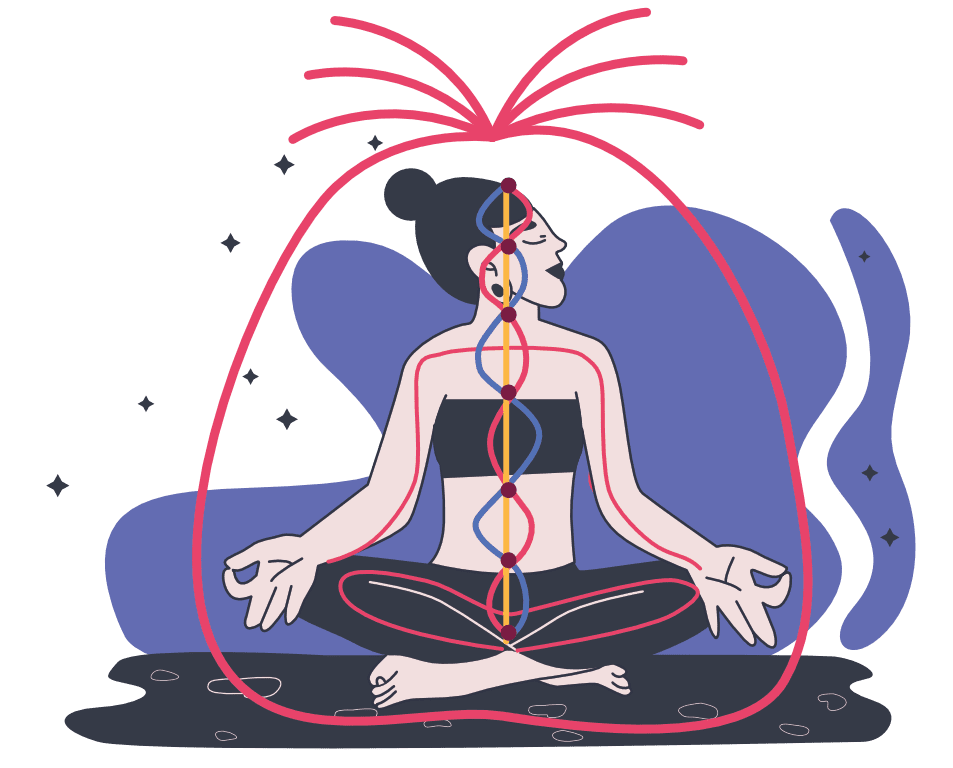
Annamaya Kosha (Physical Body)
▼
Annamaya Kosha is the outer layer that deals with the physical body and matter. Prasarita Padottanasana strengthens and stretches the leg musculature, opens the hips and fosters circulation.
Pranamaya Kosha (Energy Body)
▼
Pranamaya Kosha is the energetic layer connected with our life force, the prana. Prasarita Padottanasana fosters the flow of energy in the body, especially through the inversion and the deep breathing, which increases vitality and revitalizes the energy body.
Manomaya Kosha (Mental Body)
▼
Manomaya Kosha is the mental layer that encompasses thoughts and emotions. Prasarita Padottanasana fosters mental clarity and helps calm the carousel of thoughts.
Vijnanamaya Kosha (Intellectual Body)
▼
Vijnanamaya Kosha is the layer of intuition and wisdom. Prasarita Padottanasana can foster intuition and sharpen the awareness of the inner wisdom guide.
Anandamaya Kosha (Spiritual Body)
▼
Anandamaya Kosha is the deepest layer that deals with pure bliss and the true self. Prasarita Padottanasana can foster a feeling of joy and connection with the self.

DOSHAS
Vata
▼
This asana helps calm the Vata dosha, as it grounds the mind through the firm anchoring of the feet and the deep forward bend. The stable posture and the contact to the floor reduce the restlessness and the flighty nature of the Vata dosha, which is especially beneficial for people who tend toward fears or nervousness.
Pitta
▼
Prasarita Padottanasana can calm the fiery Pitta dosha by having a cooling effect on the body. The wide-open posture enables a free flow of breath and a gentle stretch that can help reduce excess heat in the body and soothe the mind, which can ease Pitta-characterized irritability and overheating.
Kapha
▼
Prasarita Padottanasana supports the Kapha dosha by fostering a deep grounding and stability in the body. The pose activates and strengthens the legs, while at the same time lengthening the spine and opening the upper body. This effect supports Kapha qualities such as endurance and stability, which helps keep Kapha in balance and strengthen it.

Key Information for Correct Execution
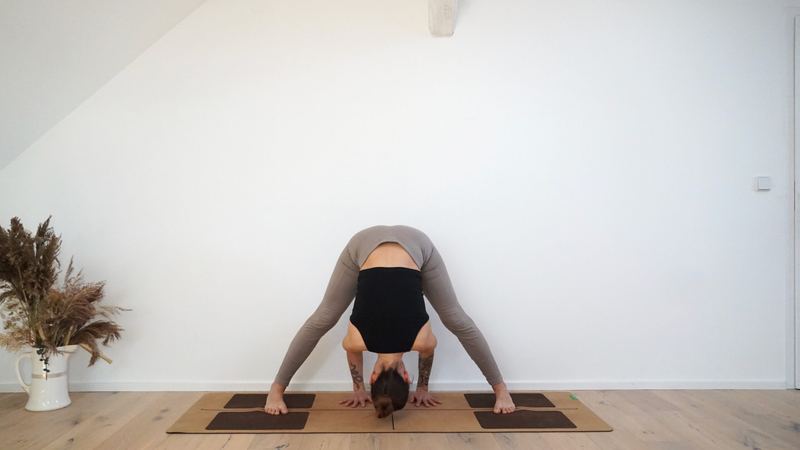
Meet Geraldine, a certified yoga teacher and psychology student who emphasizes mindfulness and alignment to inspire people toward a more peaceful life.
Common Mistakes
Important mistakes that should be avoided are a wrong distance between the feet and too much weight on the heels.
Our Tip
A tip for this posture is to occasionally shift the weight onto the tips of the toes as a test to find the right balance. The wide-legged standing forward bend is good for coming down after a long working day and calming the nervous system.
Variations
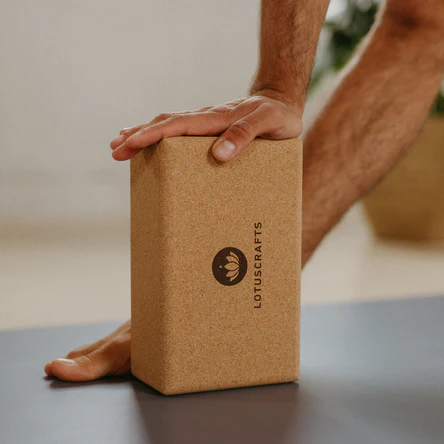
• Use of blocks under the hands if the hands do not reach the floor • With an unstable lower back or overextension in the knees, the knees can be slightly bent • To open the shoulders, the hands can be brought together or interlaced in prayer position behind the back • For a stronger stretch of the inner thigh, one foot can be gripped while the other leg is bent and the upper body is drawn toward the leg
Physical Effect
Shoulder Relaxer
In the full performance of Prasarita Padottanasana, the arms are interlaced behind the back, which draws the shoulder blades together and stretches the shoulder musculature. This helps release tension in the shoulders and the upper back.
Back Saver
This asana also strengthens and stretches the musculature of the lower back, including the lumbar areas of the spine. It supports the alignment of the spine and fosters a healthy posture.
Flexibility Fireworks
Prasarita Padottanasana is an intense stretch for the leg musculature, especially the back of the thighs (hamstrings), the adductors and the calf muscles. Through regular practice of this pose, the fascia in these areas can be stretched and the flexibility increased.
Effects on Psyche and Emotions
Self-Confidence Booster
Prasarita Padottanasana strengthens the legs and the lower back and can thus increase self-confidence by giving one the feeling of being firmly rooted and physically strong.
Emotional Balance
The forward-bent position in this asana creates a calming effect on the nervous system, which helps break down stress and establish emotional balance.
Mental Clarity
Prasarita Padottanasana fosters the blood flow to the brain, whereby mental clarity and concentration are increased. This can be especially helpful when you feel confused or indecisive.
Props
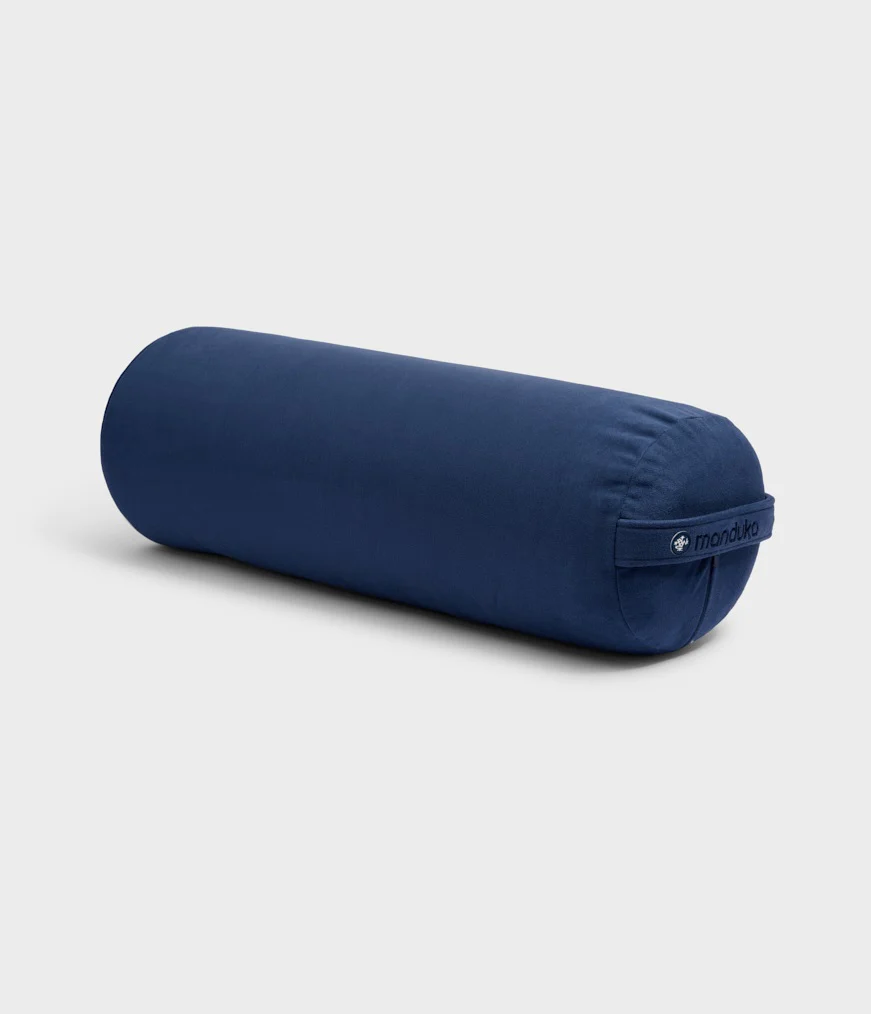
Also interesting!
Author of this Asana
Manish Rana is a certified yoga teacher and founder of asanaverse.de. He writes about topics around yoga, ayurveda and meditation. Manish owes his deep connection to yoga to his Indian roots, through which he came into contact with this practice early on.
Learn more about our team here →DISCOVER MORE
More Forward Bends
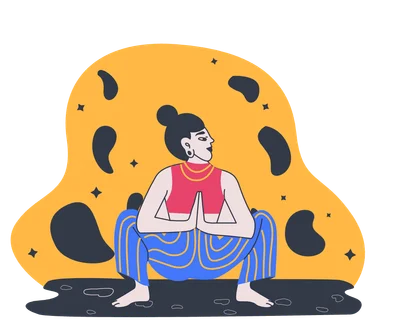
Get our free ebook with 108 asanas now!
With great care and passion, we have selected and described 108 of the most important asanas for you in detail!
Perfect for your practice and cues ;)
Thank you for being here!
Thank you for being here and being part of this ever-evolving platform! We strive to keep growing and improving.
Your feedback is invaluable. Namasté 🙏
Comments feature coming soon. 💬
Guide
Browse our guide now
Accessible Yoga Mobility: Chair Yoga and Inclusive Asanas for All Bodies
Ahimsa – Gewaltlosigkeit als Fundament des Yoga und Lebens
Yoga Sutras zusammengefasst – Kapitel 2 (Sadhana Pada): Pfad der Praxis
Meditation bei Überforderung und Angststörung: Achtsam bleiben in turbulenten Zeiten
12 Wege, das Sitzen in der Meditation zu erleichtern — Stabiler sitzen, tiefer meditieren
Brahmacharya: Quelle des Lebens für mehr Lebenskraft und Vitalität